BY REHAN JAVED
Every consumer lives with a quiet fact about the power sector: for most companies in it, cost is largely a line item, not a risk. Fuel, capacity payments, salaries, fees and prior-year claims are recovered from the consumer, month after month. The consumer is the one party with no one to pass them to.
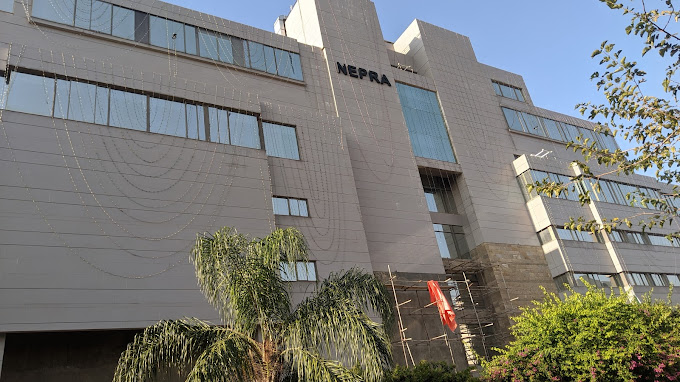
I write before NEPRA’s hearing on 3 November 2026, as an industrial consumer, from public documents, and I raise questions, not allegations.
CPPA-G has asked for a power purchase price of Rs 27.309 per unit for CY2027, against Rs 25.32 today, an increase of Rs 1.989. Three matters deserve clear answers.
One: costs that arrive after the price is set, starting with the dollar
A reference price is a forecast, and whatever differs from it is recovered later through adjustments such as the FCA and QTA. The first assumption is the exchange rate. CPPA-G’s base case uses Rs 279 to the dollar. Its sensitivity case, at Rs 290 and lower growth of 0.7%, raises the capacity purchase price by Rs 47,153 million, or 2.46%, from Rs 1,914,445 million. Its worst fuel cases, which pair Rs 290 with higher oil, gas and coal prices, add Rs 1.16 to Rs 1.58 per unit. If the rupee weakens beyond the assumption, the difference is passed on to the consumer.
According to CPPA-G data for June 2026, as reported from NEPRA’s hearing of 29 July, the fuel cost reference was Rs 7.7138 per unit and the actual was Rs 8.9138, a gap of Rs 1.20. Forecasts miss, and I suggest nothing improper. But the party who bears the miss had no say in it. CPPA-G should file reference against actual cost, month by month, for FY2025-26 and January to September 2026, before a new one is fixed.
Levies on furnace oil and diesel for power plants raise the same concern. Press reports suggest about Rs 10 per unit at the plants that bear them; the figure is disputed and no decision has been announced. Consultation should come first.
Two: the largest avoidable cost may be one we already pay
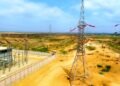
Cheaper plants in the south, on Thar coal, nuclear and wind, cannot always send their full output north. ISMO states that coal and wind are curtailed in the south while RLNG and RFO run in the north. Capacity payments continue either way.
For June 2026, reported fuel costs were about Rs 35.51 per unit for RLNG, Rs 11.46 for Thar coal and Rs 2.85 for nuclear. At the 29 July hearing, the constraint was reported to raise generation cost by over Rs 400 billion a year. Divided by CPPA-G’s projected 130,081 GWh, that is up to about Rs 3.07 per unit. This is my arithmetic, an upper bound; the petition does not say how much is already in the Rs 27.309.
Curtailment of southern renewable power fell from 3,477 GWh in 2023 to 1,335 GWh in 2025, yet NEPRA’s transmission review called the HVDC line significantly underused, and the Matiari-Moro-Rahim Yar Khan line has no date fixed. What is the CY2027 price with and without the constraint? If the line is delayed, could a targeted package for the south use idle capacity in solar hours without raising costs for others? Capacity payments are contractual; more consumption lowers the per-unit share, not the total.
Three: the cost of running the sector itself
NEPRA’s tariff tables show fuel charges falling from Rs 10.20 per unit in FY2022-23 to Rs 9.12 in CY2026, while capacity charges rose from Rs 11.07 to Rs 17.56, distribution margin from Rs 2.16 to Rs 4.09, and transmission charges from Rs 1.01 to Rs 2.19. The total rose from Rs 24.82 to Rs 33.38. Fuel is the one part that fell. The dollar alone does not explain this. The rupee stood at Rs 204.85 at the start of FY2022-23 and Rs 285.99 at its end; on 27 October 2026 it traded at Rs 276.80, below the Rs 279 CPPA-G assumes. For much of that year it was stronger than today.
The forecast itself includes service charges of Rs 248,300 million, or Rs 1.909 per unit. On top sit the ten DISCOs’ requests: by my derivation from NEPRA notices and press reports, about Rs 538 billion in margin and Rs 416 billion in prior-year adjustments and other claims. These are my calculations and may differ from the companies’ own.
When salaries, perks, new posts, fees, taxes and prior-year claims are recovered through the tariff, the consumer funds them without seeing what was gained. Which entities overlap, including NGC and ISMO, which emerged from NTDC? Can existing staff be used before new posts? Which bodies could merge? Can each show staff, salary and cost per unit for three years?
I take no pleasure in raising this. But look at what has been built: a sector whose fixed costs now outweigh its fuel, a grid looking for consumers while demand growth is modest (CPPA-G assumes 2.6% for CY2027). When consumers consider leaving, the same fixed costs fall on fewer units, which raises the price for those who remain. At the end of every pass-through is a factory, a shop or a home, and that is where costs stop moving. How long can they carry them? I hope the Authority asks on 3 November.
Rehan Javed, Industrial Consumer
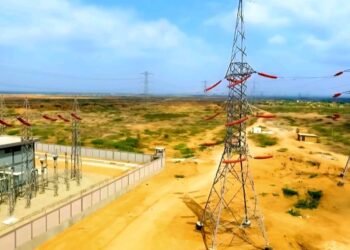
NGC energizes 220kV transmission line to power Dhabeji SEZ
LAHORE : National Grid- Pakistan has energized the 220 kV transmission line emanating from Jhampir-II to the Dhabeji substation on...
Read more