ISLAMABAD: The Petroleum Division is preparing to completely deregulate the liquefied petroleum gas (LPG) pricing regime, replacing the existing Oil and Gas Regulatory Authority (OGRA)-notified maximum price mechanism with import parity pricing, while introducing a targeted subsidy for low-income households through a dedicated fund.
Under the proposed guidelines submitted to the Cabinet, OGRA will stop issuing monthly price notifications for both locally produced and imported LPG with effect from November 1, 2026. State-owned entities, including Pakistan State Oil (PSO), SSGC LPG Limited (SLL), PARCO Pearl Gas Limited (PPGL) and Pakistan LNG Limited (PLL), will lead the transition by importing LPG in bulk and announcing a monthly base price reflecting the actual landed cost of imports.
The proposed mechanism will incorporate the Saudi Aramco Contract Price (CP) benchmark, import premium, freight, insurance, incidental expenses and applicable import taxes actually incurred by PSO and/or SLL during the preceding month.
The move marks a major departure from the existing arrangement under which OGRA determines the maximum producer, marketing and consumer prices using the Saudi Aramco contract price on a free-on-board (FOB) basis, plus a fixed margin of Rs35,000 per metric ton.
The Petroleum Division has argued that the existing formula has become commercially unworkable for imported LPG because it does not account for the premium over the Saudi benchmark, freight, insurance, port handling, terminal charges and other incidental costs. OGRA extended the indigenous LPG pricing formula to imported product in June 2023, creating what the ministry describes as a regulatory disconnect between notified prices and the actual cost of imports.
According to the Cabinet summary, the existing pricing margin has remained frozen since 2018, despite diesel prices increasing by approximately 205 percent and depreciation of the rupee by around 155 percent.
The document states that average LPG filling-plant prices during January-July 2026 were Rs60 to Rs79 per kilogram above the OGRA-notified consumer price, with the gap reaching Rs158 per kilogram in March 2026. This represented a premium of 11 to 70 percent over the notified ceiling.
The Petroleum Division maintains that consumers are already paying prices reflecting import costs in the open market, but without the protection of an effectively enforceable regulatory framework.
A central feature of the proposed policy is the establishment of a Producer-Price Differential Fund in the Public Account, through which the difference between the import-parity base price and the Saudi Aramco-linked producer price will be collected.
Under the proposed arrangement, the monthly producer price will continue to be linked to the current month’s Saudi Aramco CP on an FOB basis, adjusted according to the propane-butane ratio. Indigenous producers will be entitled to this producer price, while the differential between that price and the monthly import-parity base price will be deposited in the dedicated fund.
Refineries and producers will collect the differential and deposit it into the account, which will operate under the Public Financial Management Act, 2019, and relevant rules. The fund will be audited by the Auditor General of Pakistan.
The government intends to use the accumulated amount to provide targeted subsidies exclusively to vulnerable LPG consumers. Households meeting the Benazir Income Support Programme (BISP) criteria or the poverty-means-test (PMT) cut-off approved by the government will be eligible for assistance.
Petroleum Division will formulate operational guidelines for the fund within one month in consultation with the Finance Ministry and BISP. The subsidy framework will be reviewed annually.
The proposed arrangement is intended to separate the commercial pricing of LPG from social protection, allowing market prices to reflect import costs while providing financial assistance to deserving households.
The proposed guidelines also provide that LPG importing and marketing companies will determine their own appropriate marketing margins and freight costs, paving the way for competition in the downstream segment.
The Competition Commission of Pakistan and OGRA will be responsible for ensuring that market participants do not engage in collusion or other anti-competitive practices.
Petroleum Levy, Federal Excise Duty, sales tax and other applicable government taxes and levies will continue to be charged in accordance with law.
The guidelines also propose winding up the LPG Pricing Committee, constituted by the Federal Cabinet in 2017 to determine prices subsequently notified by OGRA. The committee’s membership was later expanded following a Lahore High Court order in March 2018 to include representatives of LPG trade associations and the Consumer Rights Commission of Pakistan.
The Petroleum Division argues that the proposed import-parity mechanism, based on published benchmarks and actual landed costs, will make the committee redundant. Its responsibilities will be transferred to OGRA, while the ministry’s role will be limited to notifying LPG product specifications for summer and winter seasons annually.
The proposed policy envisages allocating 10 percent of indigenous LPG production by exploration and production companies, refineries and other producers to state-owned marketers at the producer price.
This allocation will guarantee supplies to Northern Areas, Gilgit-Baltistan and other remote, hilly and hard-to-reach locations, where LPG is supplied through cylinders or existing LPG air-mix plants.
The remaining 90 percent of indigenous production will be allocated through transparent monthly auctions to bottlers prequalified by OGRA.
The auction floor price will be set at 5 percent below the import-parity price of PSO. Prequalification will be based on objective criteria, including investment in infrastructure and storage, cylinders in circulation, geographical coverage and operational capacity. Safeguards will also be introduced against cartelisation.
A special provision has been proposed for PARCO, which may allocate 75 percent of its 90 percent auctionable share to its subsidiary, PARCO Pearl Gas Limited. The remaining 25 percent will be sold through transparent monthly auctions.
However, the price charged to PPGL for its allocated product will not be lower than the price discovered through the auction process.
The Attorney General for Pakistan will also be requested to facilitate expeditious resolution of ongoing litigation relating to the LPG sector.
The Cabinet summary highlights the growing dependence of households on LPG amid declining domestic natural gas production and restrictions on expansion of the piped gas network, which have remained in place since December 2021.
More than 10 million households are connected to the piped natural gas network, while over 25 million households, particularly in remote areas, rely on alternative fuels, including LPG.
Pakistan’s LPG market is estimated at 2.4 million metric tons annually and has expanded at a compound annual growth rate of 7.5 percent over the last six years. Demand is projected to grow by 8 to 8.5 percent annually.
A KPMG analysis cited in the summary projects LPG demand to increase from 2.4 million tons in FY2025-26 to 4.16 million tons by FY2032-33. Domestic production, however, is expected to rise only from 0.96 million tons to 1.35 million tons, leaving imports to bridge the widening gap. Imports are projected to increase from 1.4 million tons to 2.8 million tons by 2033.
The ministry estimates that approximately 71 percent of existing LPG supplies are imported, comprising 16 percent through sea routes and 55 percent through land crossings at Taftan and Gabd-Ramdan. Local refineries contribute around 9 percent, while exploration and production companies account for approximately 20 percent.
The summary identifies serious weaknesses in the existing import infrastructure. The two LPG terminals at Port Qasim have storage capacity of approximately 6,500 metric tons each and can receive vessels of no more than 10,000 deadweight tons, compared with international standards of 30,000 to 50,000 DWT.
There is also no refrigerated storage facility or inter-terminal pipeline, restricting the country’s ability to receive larger shipments and improve economies of scale.
The government estimates that meeting demand through FY2035-36 will require investment of approximately $1 billion over the next three to five years in additional terminals, storage facilities, cylinders, filling plants and transportation capacity.
To address infrastructure constraints, the proposed guidelines envisage allocation of land and berth facilities at Port Qasim for a 40,000-metric-ton LPG terminal.
The first phase would involve storage capacity of 10,000 to 12,000 metric tons on land with access to the SSGC jetty.
The existing 10-metre draft at the SSGC LPG jetty restricts vessel size. The government proposes a bankable feasibility study to compare dredging of the Port Qasim approach channel to accommodate vessels of approximately 25,000 DWT with the alternative of developing a jetty capable of receiving very large gas carriers (VLGCs), along with a refrigerated terminal.
In the interim, state-owned entities may be allowed access to existing terminals and storage facilities.
PSO and SLL may also be authorised to arrange long-term and government-to-government supply agreements, on the lines of the KPC arrangement for high-speed diesel, to serve as a national import backstop. State-owned entities may develop or contract additional storage and handling capacity.
The Cabinet summary has also raised serious concerns about the scale of undocumented LPG imports, inadequate quality testing and unsafe handling practices.
It estimates that more than half of the country’s LPG supply enters through land crossings, where testing facilities are currently unavailable. OGRA and HDIP inspections at Taftan have reportedly found substandard product.
The document refers to repeated explosions caused by decanting at border crossings without adequate safety infrastructure, resulting in more than 60 fatalities since 2020. It also estimates that 56 percent of LPG bowsers are unlicensed.
Undocumented LPG inflows evade sales tax, Petroleum Levy and customs duty, while the government has been unable to accurately capture the volumes entering through informal channels.
The proposed guidelines direct OGRA to introduce quality testing at land entry points through HDIP by June 30, 2027. OGRA will also be required to audit the sales volumes of each licensee against its licensed storage, cylinder circulation and filling capacity, with penalties, including cancellation of licences, for non-compliance.
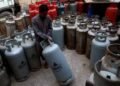
Cylinder filling will be restricted to licensed plants, while bowser-to-bowser transfer will be prohibited. Cylinder standards will be strengthened through embossing and barcoding, a ban on unregistered empty cylinders and periodic requalification of manufacturers.
The guidelines propose establishing NEPSA satellite offices and HDIP/PCSIR laboratories at land entry points by June 30, 2027. After that date, LPG volumes will not be allowed to enter through any port without spot testing.
The government also proposes amendments to Sections 285 and 286 of the Pakistan Penal Code to increase penalties and make relevant offences non-bailable. OGRA and FBR Customs will jointly undertake an exercise to measure and control undocumented inflows.
Around 2,000 LPG bowsers are currently operating in the country, of which approximately 800 are stated to comply with OGRA/NEPSA standards. Enforcement action against non-compliant bowsers is proposed to remain suspended until June 30, 2027, allowing stakeholders time to transition towards compliance.
The proposed framework requires OGRA to strengthen health, safety and environmental enforcement throughout the supply chain through regular audits, penalties, suspension of licences and cancellation of licences in case of violations.
OGRA may also convene product review meetings to assess supply-chain conditions, import plans and winter stock requirements, and may direct state-owned importers and marketers to arrange specific volumes to maintain demand-supply balance.
The Petroleum Division has emphasised that uninterrupted LPG imports are particularly important ahead of winter, when limited piped gas availability could place additional pressure on households dependent on cylinders.
The summary notes that the current geopolitical situation has increased vulnerabilities in energy supply chains, making reliable imports essential to avoid shortages and potential public distress.
The LPG sector comprises 464 licensed marketing companies, with no single company holding more than 9 percent of the market. PSO Pak Gas and SSGC LPG Limited together account for approximately 5.4 percent of market share. Ends