ISLAMABAD: The government is considering changes to Pakistan’s electricity market structure, including aligning existing power supply obligations and consumer demand with distribution companies being privatised, as part of efforts to introduce a competitive retail electricity market and reduce the burden of capacity payments on consumers.
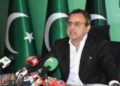
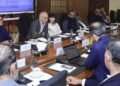
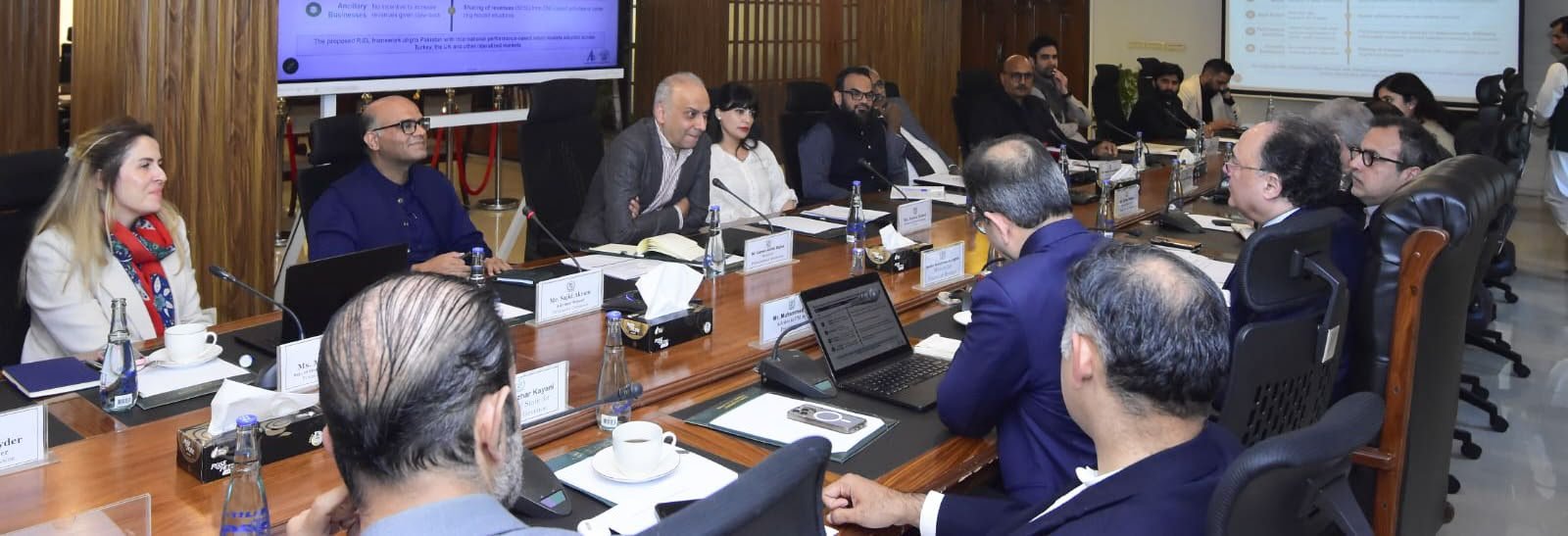
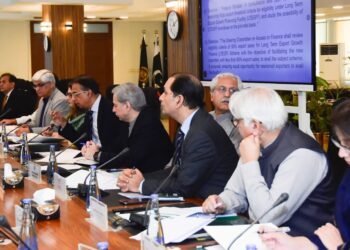
The proposals were discussed at a meeting of the Steering Committee on Power Sector Regulatory Regime, chaired by Finance Minister Senator Muhammad Aurangzeb at the Finance Division, where progress on recommendations of the Technical Working Group (TWG) was reviewed.
The meeting examined proposals to adapt the Competitive Trading Bilateral Contract Market (CTBCM) design to Pakistan’s changing electricity market, particularly in view of rapid solarisation, battery storage, declining grid demand and excess generation capacity.
The proposed arrangements are aimed at providing greater flexibility to competitive suppliers, improving utilisation of existing generation capacity and developing a more competitive electricity market. However, their implications for existing power purchase agreements, capacity-payment obligations and uniform tariff arrangements would require further examination.
The Steering Committee also discussed the need to establish clear and predictable regulatory rules for distribution network operators (DNOs) and competitive suppliers to attract private investment and strengthen investor confidence.
According to the Finance Division, the Technical Working Group had undertaken detailed work on tariff methodology, regulatory certainty, investment incentives, performance benchmarks and the future structure of the electricity market.
The meeting considered proposals concerning investment approvals, monitoring of investment plans, service delivery and performance standards, transmission and distribution losses, conflict-of-interest safeguards and the scope of ancillary commercial activities.
Participants also highlighted the need to clearly define the respective responsibilities of the National Electric Power Regulatory Authority (NEPRA) and the Competition Commission of Pakistan (CCP) to avoid overlapping regulatory jurisdictions.
The Committee reviewed proposals to strengthen the incentive structure under the Multi-Year Tariff (MYT) framework, including rewards for improvements in operational efficiency, service quality and reduction in distribution losses.
Discussions also covered returns on equity, inflation-related adjustments and mechanisms for sharing efficiency gains between companies and consumers. The meeting emphasised that improvements in operational efficiency must translate into tangible reductions in electricity costs for consumers.
The Finance Minister observed that rapid solarisation, battery storage and changing consumption patterns were transforming Pakistan’s electricity market, creating new challenges for the existing power-sector framework.
The growing mismatch between available generation capacity and actual electricity consumption has increased pressure on the power sector, particularly through capacity-payment obligations, which continue to contribute significantly to electricity tariffs.
The Committee discussed possible measures to address this imbalance and prevent further increases in the financial burden on grid-connected consumers.
The pace and sequencing of the transition towards a competitive retail electricity market also came under discussion. Participants stressed that the transition should be based on a realistic implementation roadmap, taking into account regulatory and institutional preparedness, consumer protection and investor confidence.
The Committee acknowledged that although greater competition was necessary, the process would require careful planning to ensure that market liberalisation did not create additional financial or operational challenges.
The proposed management of residual assets and liabilities of distribution companies in the context of privatisation was another important issue discussed at the meeting. These include land, outstanding receivables, pension obligations and pending litigation.
Aurangzeb called for a pragmatic and cost-effective institutional arrangement to manage these assets and liabilities, avoiding unnecessary duplication of functions and ensuring effective oversight.
The Finance Minister directed the relevant teams to identify outstanding technical and policy issues, including areas where divergent views existed, and submit considered recommendations for further deliberation by the Steering Committee.
He emphasised that continued coordination with NEPRA and other stakeholders would be essential to ensure that the proposed regulatory framework was technically sound, legally robust and practically implementable.
Aurangzeb said the overriding objective of the reform process was to reduce electricity costs, improve service delivery and establish a financially sustainable power sector. He stressed that Pakistan required practical and forward-looking solutions suited to its changing energy landscape.
The meeting was attended by Federal Minister for Power Sardar Awais Ahmad Khan Leghari, Special Assistant to the Prime Minister on Energy Lt. Gen. Muhammad Zafar Iqbal, Minister of State for Finance and Railways Bilal Azhar Kayani, Adviser to the Prime Minister on Privatisation Muhammad Ali, Chairman NEPRA, senior Finance Division officials and representatives of relevant public-sector institutions and stakeholders.
PARCO to receive Rs 1 billion against claims
ISLAMABAD: Pakistan Arab Pipeline Company Limited (PAPCO) is set to receive Rs1 billion from the government for settlement of its...
Read more