
ISLAMABAD: The government has formally initiated work on shifting Thar coal mining operations from expensive diesel generation to electricity supplied through the national grid, a move expected to save Pakistan between $25 million and $30 million annually in foreign exchange and reduce the cost of coal production.
The contract for electrification of Thar coal mining operations in Block-I and Block-II has been awarded, while the contractor has mobilised resources at the project site. The completion deadline has also been advanced to April 2028, around eight to nine months ahead of the original end-2028 target.
The development was reviewed at a meeting chaired by Federal Minister for Power Sardar Awais Ahmad Khan Leghari on November 18, 2026, which was attended by representatives of the Thar Coal and Energy Board (TCEB), Sindh Engro Coal Mining Company (SECMC), Sino Sindh Resources Limited (SSRL), Power Division and Hyderabad Electric Supply Company (HESCO).
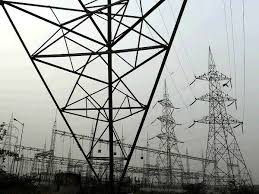
Under the direction of Prime Minister Shehbaz Sharif, the Power Division has moved the project from the planning stage to execution, with arrangements being made to connect mining operations in both blocks to the national grid through 132kV transmission infrastructure originating from the Islamkot Grid Station.
The project will provide approximately 60 megawatts of electricity to mining sites, replacing a substantial portion of the diesel currently consumed for mining and associated operations.
According to the Power Division, the shift will generate substantial foreign exchange savings by reducing dependence on imported diesel while lowering the cost of coal extraction and, consequently, the tariff of electricity generated from Thar coal.
The financial benefits are expected to be significant. Daily diesel savings are projected at approximately Rs25 million, while annual foreign exchange savings are estimated at $25 million to $30 million.
The cost of electricity currently generated through diesel for mining operations is approximately 33 US cents per kilowatt-hour. Following grid connectivity, this cost is expected to decline to around 13 cents per unit, representing a reduction of more than 60 percent.
The government expects the reduction in mining costs to lower the coal production cost by approximately $0.70 per tonne, which will subsequently reduce the coal tariff and contribute to lowering the overall power purchase basket cost.
Currently, Thar coal mining operations consume between 200,000 and 250,000 litres of diesel daily. Of this, approximately 35,000 litres are used for dewatering alone.
The electrification project will replace a significant portion of this diesel consumption with relatively cheaper electricity from the national grid, reducing operating expenditure and exposure to fluctuations in international petroleum prices.
The Power Division has also succeeded in bringing forward the project’s completion schedule to April 2028, compared with the original end-2028 deadline.
With the contractor already mobilised at the site, the government expects the earlier completion to accelerate the realisation of foreign exchange savings and reduce the financial burden associated with diesel-powered mining operations.
The minister emphasised the importance of close coordination among all stakeholders to ensure timely completion of the transmission infrastructure and uninterrupted electricity supplies to both mining blocks.
The 132kV connectivity from Islamkot Grid Station is expected to provide a more economical and reliable source of electricity for the large-scale mining operations required to sustain Thar coal production.
Apart from grid connectivity, the government is also encouraging the transition of diesel-powered mining vehicles towards electric vehicles (EVs), as part of a broader strategy to reduce operational costs and carbon emissions.
During the meeting, the Managing Director of TCEB informed the minister that both Thar mining blocks were actively pursuing EV deployment.
Block-I plans to induct approximately 40 electric trucks by the end of 2026, while Block-II is targeting the commencement of EV deployment in 2028, alongside completion of grid connectivity.
The transition to electric mining vehicles is expected to complement the electrification of mining operations by reducing diesel consumption in transportation and other mining-related activities.
According to the Power Division, the combined measures are expected to reduce carbon emissions by approximately 80,000 tonnes annually, supporting the government’s longer-term decarbonisation objectives.
Thar coal is a key component of the China-Pakistan Economic Corridor (CPEC) and an important pillar of Pakistan’s strategy to utilise indigenous energy resources and reduce dependence on imported fuels.
The development of local coal resources has been aimed at reducing the country’s exposure to international fuel price volatility, conserving foreign exchange and providing a more sustainable fuel source for power generation.
However, the substantial consumption of imported diesel in mining operations has remained an additional cost burden for the Thar coal supply chain.
The proposed transition to grid-based electricity is expected to address this issue by reducing the cost of extraction and improving the overall economics of locally produced coal.
Appreciating the coordination among all stakeholders, Leghari stressed the need to accelerate the adoption of electric vehicles in mining operations and ensure timely completion of the grid connectivity project.
He observed that reducing diesel imports, easing pressure on foreign exchange reserves and lowering the cost of electricity generated from indigenous coal would help translate Pakistan’s domestic energy resources into more affordable electricity for consumers.
The Power Division considers the project an important component of its efforts to improve the competitiveness of indigenous energy resources, reduce dependence on imported fuels and lower the overall cost of electricity generation.
With the contract awarded, the contractor mobilised and the completion deadline advanced to April 2028, the government expects the electrification of Thar Blocks-I and II to deliver both economic and environmental benefits through reduced diesel consumption, lower mining costs and improved utilisation of domestic energy resources.
Govt approves major overhaul of LPG pricing system: OGRA to surrender price setting role
ISLAMABAD: The government is planning a major overhaul of the liquefied petroleum gas (LPG) pricing and marketing regime, proposing to...
Read more