
ISLAMABAD: The country’s power tariff outlook clouded by uncertainties as Central Power Purchasing Agency –Guaranteed (CPPA-G) has sought 16 per cent in Power Purchase Price for CY2027 PPP in worst case.
The outlook for electricity tariffs in calendar year 2027 has become increasingly uncertain, with the Central Power Purchasing Agency-Guaranteed (CPPA-G) projecting an approximately 8 per cent increase in the average Power Purchase Price (PPP) under its base-case scenario, while warning that adverse fuel prices, exchange-rate movements and supply constraints could push the cost substantially higher.
The agency has projected an average PPP of Rs27.309 per kilowatt-hour (kWh) for CY2027 against Rs25.320 per unit approved for CY2026. However, its worst-case scenarios indicate that the average purchase price could reach Rs28.835 and Rs29.255 per unit, respectively, raising concerns about the sustainability of electricity costs for industrial and domestic consumers.
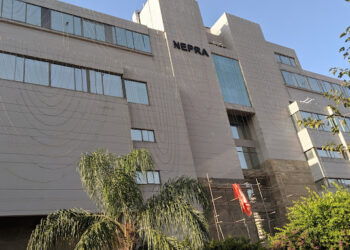
The projections were presented during a public hearing held by the National Electric Power Regulatory Authority (NEPRA) on Tuesday to examine CPPA-G’s projected power purchase price report, which will provide the basis for rebasing consumer-end electricity tariffs effective January 1, 2027.
The hearing exposed considerable uncertainties surrounding electricity demand, fuel availability, international commodity prices, transmission constraints and capacity payments, with industrial representatives questioning whether the projected reduction in generation costs would translate into lower consumer tariffs.
Chairman NEPRA Waseem Mukhtar sought explanations from CPPA-G regarding assumptions relating to regasified liquefied natural gas (RLNG), rupee-dollar parity, Brent crude prices and discrepancies in demand projections submitted by CPPA-G, the Independent System and Market Operator (ISMO) and distribution companies (DISCOs).
A CPPA-G team led by Chief Executive Officer Rihan Akhtar presented six scenarios for CY2027, acknowledging that international fuel prices, availability of fuels, exchange-rate fluctuations and higher fuel charges adjustments (FCAs) could materially alter the electricity purchase price.
Under the base-case scenario, CPPA-G has projected total power purchase costs of Rs3.552 trillion against electricity sales of 130,081 gigawatt-hours (GWh) to DISCOs, translating into an average PPP of Rs27.309 per unit.
The ideal-case scenario projects a lower PPP of Rs25.883 per kWh, with total power purchase costs of Rs3.367 trillion. However, the two worst-case scenarios indicate costs of Rs28.835 and Rs29.255 per unit, reflecting higher fuel prices, variable operation and maintenance expenses and capacity charges.
The demand-sensitivity scenario projects a PPP of Rs27.568 per unit, while an alternative RLNG and indigenous gas-mix scenario estimates the price at Rs26.441 per kWh.
According to Rihan Akhtar, CPPA-G has classified uncertainties into low, moderate and high categories, with international oil prices, LNG supplies and oil-linked contracts among the most significant variables affecting electricity costs.
High uncertainties include global oil-price movements affecting RLNG and residual fuel oil (RFO), oil-linked LNG contracts, spot-market prices, gas availability and fluctuations in furnace-oil prices.
Moderate uncertainties include international coal prices, freight charges, exchange-rate movements and domestic interest rates affecting financing costs incorporated into capacity payments.
Low uncertainties include exchange-rate movements affecting imported fuels and foreign-currency-linked capacity payments, electricity demand growth, domestic inflation, local coal prices and hydrological conditions influencing hydel generation.
CPPA-G has developed the six scenarios using assumptions relating to electricity demand, exchange rates, US inflation, Karachi Interbank Offered Rate (KIBOR), Secured Overnight Financing Rate (SOFR), domestic inflation, transmission charges, market operator fees and losses in the National Grid Company (NGC) system.
Under the base case, electricity demand is assumed to grow by 2.60 per cent, with the exchange rate projected at Rs279 per dollar, US inflation at 2.10 per cent, KIBOR at 11.70 per cent, SOFR at 3.98 per cent and domestic inflation at 8.20 per cent.
The exchange-rate assumption rises to Rs290 per dollar under both worst-case scenarios, while the demand-sensitivity scenario assumes growth of only 0.70 per cent.
NEPRA directed CPPA-G to revise its KIBOR assumption to 12 per cent from 11.70 per cent, a change that could further affect the projected electricity purchase price.
Under the base case, fuel costs have been estimated at Rs1.319 trillion, equivalent to Rs10.141 per unit, while variable operation and maintenance expenses are projected at Rs70.575 billion, or Rs0.543 per kWh.
Capacity charges remain the largest component of power purchase costs, estimated at Rs1.914 trillion, equivalent to Rs14.717 per unit. Transmission and market-related charges have been projected at Rs248.3 billion, or Rs1.909 per kWh.
Under the ideal-case scenario, fuel costs decline to Rs1.134 trillion, or Rs8.714 per unit, while capacity charges remain unchanged at Rs1.914 trillion.
Worst-case scenario-I envisages fuel costs of Rs1.469 trillion and capacity charges of Rs1.962 trillion, pushing the PPP to Rs28.835 per unit. Under worst-case scenario-II, fuel costs increase further to Rs1.524 trillion, while capacity charges remain at Rs1.962 trillion, taking the PPP to Rs29.255 per kWh.
Rihan Akhtar stated that international crude oil prices remained uncertain and all fuels, including LNG, were linked to international petroleum prices.
“Electricity purchase price estimates have been formulated based on oil, LNG prices and water availability,” he said.
Responding to a question, he explained that CY2027 demand projections had been prepared assuming zero load-shedding, although the government could introduce load management if required.
Chief Financial Officer of Power Planning and Monitoring Company (PPMC) Naveed Qaiser said electricity demand had been met during the previous year and new assumptions had been incorporated into CY2027 projections. He also supported continuation of the incremental electricity package for industrial consumers.
Industrial representatives, however, strongly opposed continuation of the package, arguing that it benefited a limited number of industries while increasing the burden on other consumers through cross-subsidies.
Aamir Sheikh demanded immediate suspension of the incremental package, stating that it had failed to produce any significant improvement in electricity demand and had increased costs for more than 90 per cent of consumers who did not receive its benefits.
He also called for prospective application of fuel charges adjustments from January 1, 2027, when the rebased tariff becomes effective, arguing that industries required advance certainty regarding electricity costs.
Sheikh warned that the Power Division had indicated FCAs could increase two to three times during winter, making it difficult for industries to plan production and exports.
He further demanded removal of levies on furnace oil and diesel used for electricity generation, maximum allocation of indigenous gas to power plants and urgent removal of South-North transmission constraints.
Questioning the increase in non-fuel expenses despite the rupee strengthening from around Rs290 to Rs279 against the dollar, Sheikh urged NEPRA to scrutinise the approximately 12 per cent non-fuel component of electricity costs.
Tanveer Barry, another Karachi-based industry representative, observed that the projected PPP range of Rs25.883 to Rs29.255 per unit indicated considerable uncertainty regarding electricity costs during CY2027.
He questioned why capacity charges remained exceptionally high despite previous assurances that negotiations with independent power producers (IPPs) would substantially reduce them.
Barry also sought details of additional power plants expected to enter the system during CY2027 and their implications for capacity payments.
He advocated greater reliance on Thar coal, nuclear power, wind and indigenous gas instead of expensive imported fuels, including RLNG. He also urged DISCOs to control administrative expenses, improve recoveries, stop unnecessary hiring and contain circular debt.
Rehan Javed stressed that the average consumer-end electricity tariff of Rs33.38 per unit during CY2026 must come down rather than increase further.
He argued that the PPP alone was insufficient to assess the actual burden on consumers, as distribution and other charges substantially increased the final consumer-end tariff.
Javed submitted detailed objections seeking explanations from CPPA-G, ISMO, NGC, the Petroleum Division and DISCOs regarding demand forecasts, fuel assumptions, transmission constraints, merit-order violations and capacity payments.
He particularly questioned the assumption of 200 million cubic feet per day of indigenous gas in the alternative RLNG and gas-mix scenario, asking what would happen if the projected supplies failed to materialise and who would bear the additional costs.
The industrial representative also demanded detailed disclosure of South-North electricity transfer constraints, actual transmission utilisation against projected capacity of 3,200 to 4,800 MW and the annual financial cost of transmission bottlenecks, reportedly exceeding Rs400 billion.
He sought an hourly explanation of deviations from the merit order, including the quantities of electricity generated from expensive fuels despite the availability of cheaper alternatives.
Industry representatives also urged NEPRA to examine overlapping functions of CPPA-G, NGC, ISMO, PPIB, WAPDA and DISCOs, proposing rationalisation of the power-sector structure, reduction in staffing and salary expenses and a comprehensive three-year cost-cutting plan.
They requested NEPRA to ensure that the CY2027 consumer-end tariff remained below Rs33.38 per unit, record its findings on objections in the determination and require NGC to present detailed transmission data.
They further demanded at least seven days’ advance notice of the consumer-end tariff hearing, arguing that short notice in previous years had deprived consumers of sufficient time to scrutinise the figures.
Arif Bilvani, another intervener, sought clarification regarding the proposed increase in electricity supply to K-Electric from the national grid.
The hearing thus highlighted that the proposed CY2027 tariff rebasing remains exposed to multiple risks, with the final consumer-end tariff dependent not only on international fuel prices and exchange-rate movements but also on capacity payments, transmission bottlenecks, electricity demand and the ability of power-sector entities to control their operating costs.
The difference between the ideal and worst-case projections underscores the challenge facing NEPRA in determining a tariff that balances cost recovery with affordability, particularly for an industrial sector already struggling with high electricity prices and uncertainty over future FCAs.
During the hearing, an official of CPPA-G said that they have abandoned linking hydel generation with the country’s GDP growth projection due to entry of solar in the system.
He said, projection for hydel generation for the CY 2027 is based average generation of five years data.
Ends
When every cost passes through
BY REHAN JAVED Every consumer lives with a quiet fact about the power sector: for most companies in it, cost...
Read more