ISLAMABAD: Pakistan’s rapidly expanding rooftop solar market is increasingly driving demand for residential battery energy storage systems (BESS), as high electricity tariffs, unreliable grid supply and declining battery prices encourage consumers to seek greater energy independence.
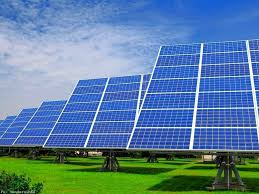
According to a analysis of Renewable First ” from solar panels to storage : Pakistan’s battery boo, begins ” , Pakistan’s residential rooftop solar market reached around 16 gigawatts (GW) in FY2025, while the number of solarised households surged 147 per cent, increasing from 3.0 million in 2023 to 7.3 million in 2025.
Despite this remarkable expansion, residential battery storage remains largely untapped, with only 4 per cent, or approximately one in 26 solarised households, currently equipped with lithium-ion battery systems.
Residential lithium-ion battery imports reached an estimated 7.6 gigawatt-hours (GWh) by 2025, with 4.6 GWh or 60 %, arriving in 2025 alone providing storage capacity to approximately 282,000 households. This represents a 220 % year -on-year increase. The 5–10 kilowatt-hour (kWh) battery segment has emerged as the dominant category, offering an optimal balance between affordability, backup duration and household electricity requirements.
The figures indicate substantial potential for further battery deployment as solar consumers increasingly seek to store surplus electricity rather than rely on grid exports.
Pakistan’s accelerating transition towards rooftop solar has been driven primarily by a sharp deterioration in electricity affordability and supply reliability.
Between FY2020 and FY2024, electricity tariffs surged by 155 per cent, pushing the average tariff to nearly Rs44 per kWh and placing unprecedented financial pressure on households and businesses.
Pakistan’s electricity prices are among the highest in the region, averaging around 13 cents per unit, compared with India and Bangladesh, where electricity tariffs are almost 50 per cent lower.
The increasing cost of grid electricity has not only strained household budgets but also weakened the competitiveness of businesses and industrial consumers, particularly energy-intensive sectors.
Persistent load shedding and unreliable electricity supply have further undermined consumer confidence in the national grid, disrupting industrial and commercial operations and increasing the cost of doing business.
The combined impact of higher tariffs and unreliable power supply has also significantly altered electricity consumption patterns.
Electricity demand recorded an unprecedented 10 per cent decline in FY2023 and has remained largely stagnant since, despite population growth and the addition of new electricity consumers.
This unprecedented contraction reflects a structural change in consumer behaviour, with households and businesses increasingly reducing grid consumption or shifting towards alternative sources of electricity.
Against this backdrop, rooftop solar has emerged as a major response to Pakistan’s electricity crisis.
A dramatic decline in global solar photovoltaic (PV) prices improved the economics of rooftop installations, triggering an unprecedented solar boom across the country.
Cumulative solar panel imports reached nearly 55 GW by March 2026, while installed solar capacity was estimated at around 38 GW by June 2025.
However, rising solar penetration has created a new challenge: surplus electricity generated during daylight hours cannot always be consumed immediately, while the value of electricity exported to the grid has declined under the net billing regime.
Consequently, battery storage is becoming increasingly attractive as consumers seek to maximise the utilisation of their own solar generation and reduce dependence on expensive grid electricity during evening and nighttime hours.
The report has further suggested that the the economics of battery storage are also improving rapidly. Battery prices have declined approximately 75 per cent over the past decade, falling from more than $460 per kWh in 2015 to around $110 per kWh in 2024. Further price reductions are anticipated through 2027, potentially making residential storage systems increasingly affordable.
This global cost reduction is coinciding with Pakistan’s rapidly expanding solar market, creating favourable conditions for accelerated battery adoption.
Economical Chinese battery systems are already entering the Pakistani market, where high grid tariffs, growing rooftop solar penetration and concerns over electricity reliability have created substantial demand for storage solutions.
If the global battery price trajectory continues, imports of battery energy storage systems are expected to accelerate, extending beyond residential consumers into commercial and industrial segments.
The emerging battery market could eventually reshape Pakistan’s electricity consumption patterns by enabling consumers to store surplus solar generation, reduce reliance on grid electricity and improve energy security.
With millions of households already equipped with rooftop solar systems but only a small fraction having battery storage, Pakistan’s residential BESS market appears poised for significant expansion in the coming years, said NE in its report. Ends