ISLAMABAD: The government has framed a stringent legal framework to improve safety standards for two-, three- and four-wheel vehicles across the country. The proposed law includes mandatory recalls and punitive actions against assemblers or importers who fail to rectify major faults or recall faulty units within one year of warranty, sources in EDB told Newzshewz.
The ” Motor Vehicles Industry Development Bill, 2025″ has been approved by the Cabinet Committee on Disposal of Legislative Cases (CCLC) and later by the Federal Cabinet. It is now scheduled to be laid before the National Assembly in the session beginning Monday( August 4, 2025) . The legislation comes at a time when several Chinese automobile companies have entered the Pakistani market.
“We have proposed a fine of up to ” Rs 2 million or a three-year jail term for auto manufacturing or assembling companies that fail to correct manufacturing defects or recall vehicles. The name of the violating company will also be made public,” said Secretary Industries and Production ,Saif Anjum.
According to him, the offence will be non-cognizable and bailable, except when a recall order is ignored. The National Assembly Standing Committee on Industries and Production, however, believes that a three-year jail term may be insufficient in cases where auto companies violate their contractual obligations with buyers. The committee also recommended strengthening consumer protection by holding companies fully accountable.
Secretary Saif Anjum emphasized that action against powerful auto manufacturers had been difficult under existing laws, even citing instances involving Japanese firms. “Automobile manufacturing began in Pakistan in 1983, but we still lack enforceable safety standards,” he said.
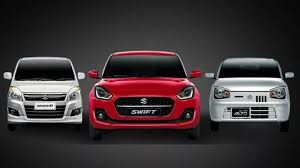
Pakistan’s auto industry is worth over Rs 600 billion, producing around 1.8 million units annually, including more than 1.5 million two- and three-wheelers. The remaining production consists of cars, SUVs, pickups, trucks, and other four-wheelers.
In 2021, Pakistan became a signatory to the 1958 UNECE Agreement, and the Engineering Development Board (EDB) was designated as the national secretariat for the WP.29 automotive regulations.
The new legislation seeks to fill the regulatory void by defining minimum standards and curbing unfair market practices. Key objectives include regulating manufacturing and imports, ensuring safety and environmental compliance, and aligning the domestic auto sector with international best practices.
Key Regulatory Measures Proposed in the new law : Mandatory Licensing: All assemblers and importers must be incorporated entities with a paid-up capital threshold determined by the Federal Cabinet.
Minimum Standards: Locally assembled and imported vehicles and components must meet defined safety, quality, and environmental standards. No vehicle or part may be sold without certification that it meets minimum standards.
Corrective Action & Recalls: Manufacturers/importers must correct any safety-related defects and issue recalls where needed.
After-Sales Service: Companies must provide proper maintenance and repair facilities.
Recall Enforcement: The government will have powers to enforce recalls or corrective measures if a company fails to act.
Inspection Outsourcing: Provisions allow outsourcing of vehicle inspections to ensure efficient monitoring.
Consumer Protection Clause: The bill includes a clause to prevent companies from shifting disproportionate risk to buyers, especially in cases where prices are altered after advance payments.
The Engineering Development Board will serve as the central regulatory body, while provincial authorities will be designated to assist in enforcement after consultation.
The proposed law is being seen as a major step toward modernizing Pakistan’s auto industry, improving export potential, and protecting consumer rights.