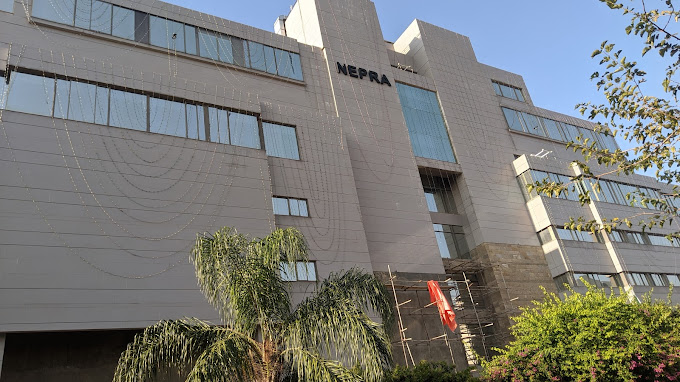
ISLAMABAD : The National Electric Power Regulatory Authority (NEPRA) has called for sweeping structural reforms in Pakistan’s power distribution sector after identifying serious operational, financial, and safety shortcomings during FY 2024–25.
In its Performance Evaluation Report (PER) released on Wednesday, the regulator proposed breaking up large distribution companies (DISCOs) into smaller and more manageable units, accelerating privatisation and public–private partnership models, and gradually abolishing the AT&C losses-based load-shedding mechanism, which has been in place since 2013.
Mounting Financial Losses
NEPRA reported that transmission and distribution (T&D) losses remain one of the sector’s most pressing challenges. None of the DISCOs managed to stay within the regulator’s prescribed loss limits during FY 2024–25, resulting in an estimated Rs 265 billion burden on the national exchequer.
The largest financial setbacks were recorded by PESCO (Rs 87.48 billion), QESCO (Rs 52.41 billion), SEPCO (Rs 36.04 billion), and LESCO (Rs 35.17 billion).
Meanwhile, K-Electric posted T&D losses of 14.73% against a target of 14.27%. Although NEPRA later revised K-Electric’s loss benchmarks — splitting them into 0.75% transmission and 8.80% distribution losses — the revised determination has yet to be formally notified and remains under review before the Sindh High Court.
Despite approving substantial investments for system upgrades, including feeder optimisation, network reinforcement, advanced metering infrastructure, and preventive maintenance, NEPRA observed that implementation by DISCOs has been slow and ineffective. The regulator stressed that weak execution continues to undermine efficiency and loss-reduction efforts.
Recovery Performance: A Mixed Picture
On revenue recovery, the report presents contrasting results. IESCO, GEPCO, FESCO, LESCO, and MEPCO achieved a 100% recovery rate, reflecting comparatively strong financial discipline. PESCO and K-Electric maintained recovery levels above 90%.
However, HESCO and SEPCO lagged significantly, posting recovery rates of 74.80% and 74.20%, respectively. QESCO performed worst, with a recovery rate of just 38.7%, although this marked an improvement from the previous year’s 31.79%.
Overall, poor recovery performance by XW-DISCOs contributed to an additional Rs 132 billion loss to the national exchequer. K-Electric’s unrecovered amount stood at Rs 74.6 billion, reflecting a 90.56% recovery ratio.
Reliability and Service Delivery Gaps
The regulator expressed concern over persistent reliability issues, noting that most DISCOs failed to meet prescribed standards under SAIFI and SAIDI performance indicators. Although some companies showed marginal improvement, none succeeded in meeting the SAIDI benchmarks, indicating prolonged power interruptions across service areas.
In terms of new electricity connections, performance also varied. While PESCO, IESCO, HESCO, and LESCO managed to provide over 95% of connections within the mandated timeframe, GEPCO and QESCO narrowly missed the target. MEPCO and K-Electric underperformed significantly, leaving 13–14% of applicants unconnected within the stipulated period.
As of June 2025, approximately 128,096 eligible consumers were still awaiting connections despite having fulfilled payment requirements.
Load Shedding and Legal Action
NEPRA strongly criticised ongoing load shedding, stating that some DISCOs continue to impose outages despite receiving adequate power allocations. The regulator termed the practice a violation of the NEPRA Act 1997 and the Performance Standards (Distribution) Rules 2005.
Legal proceedings were initiated against PESCO, QESCO, HESCO, SEPCO, and K-Electric. Each company was fined Rs 50 million, while SEPCO and HESCO were additionally subjected to a daily fine of Rs 100,000. However, PESCO and K-Electric have secured stay orders from the Appellate Tribunal, temporarily halting further action.
The regulator also criticised the long-standing AT&C losses-based load-shedding mechanism, arguing that it has failed to produce meaningful improvement over the past 12 years and unfairly penalises paying consumers for the defaults of others.
Consumer Complaints and Safety Concerns
During FY 2024–25, DISCOs recorded over 7.4 million consumer complaints. However, significant discrepancies in reporting were observed. SEPCO reported only 1,627 complaints, whereas K-Electric accounted for 23% of the total complaints nationwide. NEPRA highlighted the urgent need for a unified, digital complaint management system to ensure transparency and accurate reporting.
Safety performance also deteriorated during the year, with 118 fatalities reported — including 38 employees and 80 members of the public. IESCO recorded the highest number of incidents, followed by PESCO, K-Electric, and HESCO.
Following investigations under Section 27A of the NEPRA Act, the regulator imposed fines and directed all DISCOs to improve earthing and grounding systems within their networks. However, compliance has remained unsatisfactory, prompting continued legal scrutiny.
Call for Structural Reforms
Summing up its findings, NEPRA concluded that Pakistan’s power distribution system continues to face deep-rooted structural and operational inefficiencies. The regulator emphasised that meaningful improvement will require decisive reforms — including corporatisation, restructuring of large DISCOs, privatisation initiatives, adoption of modern technologies, and a shift toward customer-centric governance.
Without urgent corrective measures, NEPRA warned, financial instability and service quality concerns are likely to persist across the sector.
PAEC seeks revision in tariffs of Knupp units 2&3
ISLAMABAD : Pakistan Atomic Energy Commission (PAEC) has sought a revision /modification of tariffs of its Karachi Nuclear Power Plants...
Read more