ISLAMABAD: Pakistan is set to save an estimated $3.239 billion over the next 26 years — including $2.113 billion in foreign exchange — by converting Jamshoro Power Plant’s Unit-01 from imported coal to 100 percent indigenous Thar lignite, according to a Bankable Feasibility Study (BFS) presented to Federal Minister for Power Sardar Awais Ahmed Khan Leghari on Tuesday.
The BFS, prepared by internationally reputed consultants Dornier Group and EY Parthenon, has concluded that the proposed conversion is technically feasible, economically viable, and environmentally manageable, marking a significant step forward in the country’s push towards energy self-sufficiency.
The study was completed with the active collaboration of key stakeholders, including K-Electric (KE), Jamshoro Power Company Limited (JPCL), and the Private Power and Infrastructure Board (PPIB). To oversee progress, the Power Minister had constituted a high-level steering committee, which held 38 sessions, including 15 chaired by the minister himself, to ensure timely completion of the study.
The Minister acknowledged the contributions of all partner organisations, stating that their coordinated efforts were instrumental in achieving this milestone. The initiative stems from the Prime Minister’s Power Sector Reform Plan and reflects the government’s broader strategy of fuel indigenisation to reduce reliance on imported energy sources.
According to the BFS, the project offers a strong economic case, with a cost-benefit ratio of 1.8 times that remains robust under various sensitivity scenarios. The total net benefit of $3.239 billion comprises $1.720 billion in gains to the power sector and $1.519 billion in savings to the government through reduced interest payments on foreign borrowings.
The power sector benefits include $1.051 billion in generation cost savings and $669 million linked to the expansion of Thar coal mining operations. The study emphasises that the project’s foreign exchange savings of $2.113 billion will significantly ease pressure on Pakistan’s balance of payments while insulating the energy sector from global coal price volatility and currency fluctuations.
The capital expenditure required for the conversion is estimated at $86.2 million, with the total project cost reaching $116.6 million, indicating a highly favourable return on investment.
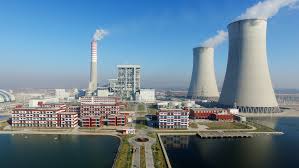
From a technical standpoint, the BFS confirms that Jamshoro Unit-01 — Pakistan’s ultra-supercritical coal-fired power plant — can be successfully converted to operate on Thar lignite through targeted engineering adjustments, rather than a complete boiler replacement. This approach preserves the value of the existing asset while minimising costs.
The project has been structured as a bankable brownfield modification, following a stage-gate implementation strategy that does not involve the addition of new coal-based capacity. This aspect is expected to address environmental and regulatory concerns while ensuring compliance with existing frameworks.
Beyond financial gains, the conversion is expected to generate significant economic spillovers. The shift to Thar lignite will stimulate further development of coal mines in Tharparkar, creating employment opportunities, boosting local infrastructure, and strengthening Pakistan’s domestic energy supply chain.
Officials believe that reducing dependence on imported coal — which is subject to international supply disruptions and price shocks — will enhance long-term energy security and support macroeconomic stability.
With the BFS formally submitted, the Ministry of Energy (Power Division) is now moving towards the implementation readiness phase. Immediate priorities include securing final policy approvals, initiating lender consent processes, and preparing amendments to existing financing arrangements.
In addition, work will begin on obtaining approvals from regulatory and oversight bodies, including NEPRA, SEPA, PPRA, and other relevant institutions. The project will also involve detailed engineering verification, including computational fluid dynamics (CFD) modelling, mill performance testing, and modifications to flue gas desulphurisation (FGD), electrostatic precipitator (ESP), and balance-of-plant systems.
Comprehensive safety and risk assessments, including HAZID and HAZOP studies, will also be undertaken alongside the development of procurement and contracting strategies to ensure efficient execution.
Officials said the government remains committed to implementing the project in a timely and bankable manner, describing it as a cornerstone of Pakistan’s transition towards indigenous energy resources, fiscal sustainability, and long-term energy security.
The Jamshoro conversion project is being viewed as a model for future initiatives aimed at reducing import dependence and leveraging domestic resources, particularly in the context of rising global energy uncertainties.
Expensive RLNG, imported coal, previous adjustments drive up September power costs
ISLAMABAD : A massive increase in the prices of regasified Liquefied Natural gas (RLNG) and Residual Fuel Oil (RFO), coupled...
Read more