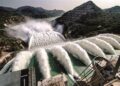
ISLAMABAD : Pakistan’s hydel power generation witnessed a significant increase of over 62 percent, reaching 2,105 GWh in March 2026 compared to 1,297 GWh in the same month last year. In contrast, electricity generation from RLNG-fired power plants declined sharply by 67 percent, falling to 504 GWh from 1,528 GWh in March 2025.
The Central Power Purchasing Agency-Guaranteed (CPPA-G) has sought a positive adjustment of Rs 0.2660 per unit under the Fuel Charges Adjustment (FCA) mechanism for March 2026. This adjustment is expected to impose an additional financial burden of approximately Rs 2.3 billion on consumers nationwide, primarily due to the substantial reduction in RLNG-based power generation.
Despite this increase, consumers are likely to see a net relief in April 2026 bills, as the FCA of Rs 0.2660 per unit for March will replace a significantly higher FCA of Rs 1.42 per unit charged in previous month, resulting in an effective reduction of around Rs 1.16 per unit.
The National Electric Power Regulatory Authority (NEPRA) has scheduled a public hearing on April 28, 2026, to review the FCA petition filed by CPPA-G.
According to data submitted by CPPA-G, hydel generation remained the largest contributor to the overall energy mix, accounting for 23.55 percent (2,105 GWh) of total electricity generation. Nuclear power followed with a share of 21.95 percent (1,962 GWh) at a relatively low cost of Rs 2.7836 per unit.
Coal-based generation also maintained a significant share, with local coal contributing 1,498 GWh (16.76 percent) at Rs 11.14 per unit, while imported coal accounted for 1,234 GWh (13.80 percent) at a higher cost of Rs 15.2324 per unit.
Electricity generation from gas-fired plants stood at 1,014 GWh, representing 11.34 percent of total output, at a cost of Rs 13.3470 per unit. In contrast, RLNG-based generation dropped to just 504 GWh, making up 5.64 percent of the total generation, at a comparatively high cost of Rs 24.5559 per unit.
Power generation from residual fuel oil (RFO)-based plants remained limited at 90 GWh, with a high generation cost of Rs 36.1606 per unit.
Renewable energy sources, including wind, solar, and bagasse, collectively contributed a modest share, reflecting the country’s continued reliance on conventional energy sources.
Notably, no electricity was generated using high-speed diesel (HSD) during the month, indicating efforts to avoid extremely expensive fuel options. However, electricity imports from Iran, though minimal in volume, were relatively costly at Rs 32.0085 per unit.
Fuel cost adjustments are a routine feature of Pakistan’s power tariff structure, allowing utilities to pass on fluctuations in international fuel prices and variations in the energy mix to consumers. However, such adjustments often face criticism amid persistently high electricity tariffs and inflationary pressures.
According to CPPA-G, a total of 8,939 GWh of electricity was generated in March 2026 at a cumulative fuel cost of Rs 72.214 billion, translating into an average fuel cost of Rs 8.0783 per unit. After accounting for prior period adjustments, sales to independent power producers (IPPs), and transmission losses, the net electricity supplied to distribution companies (DISCOs) stood at 8,664 GWh at an average cost of Rs 8.2612 per unit.
CPPA-G has maintained that since the FCA for March 2026 stands at Rs 8.2612 per unit against the reference fuel cost of Rs 7.9952 per unit, a positive adjustment of Rs 0.2660 is justified. Ends