ISLAMABAD: Minister for Petroleum and Natural Resources, Ali Pervaiz Malik has said that the Petroleum Division is finalising agreements with local refineries aimed at addressing longstanding structural issues in the sector and encouraging investment in deep-conversion facilities.
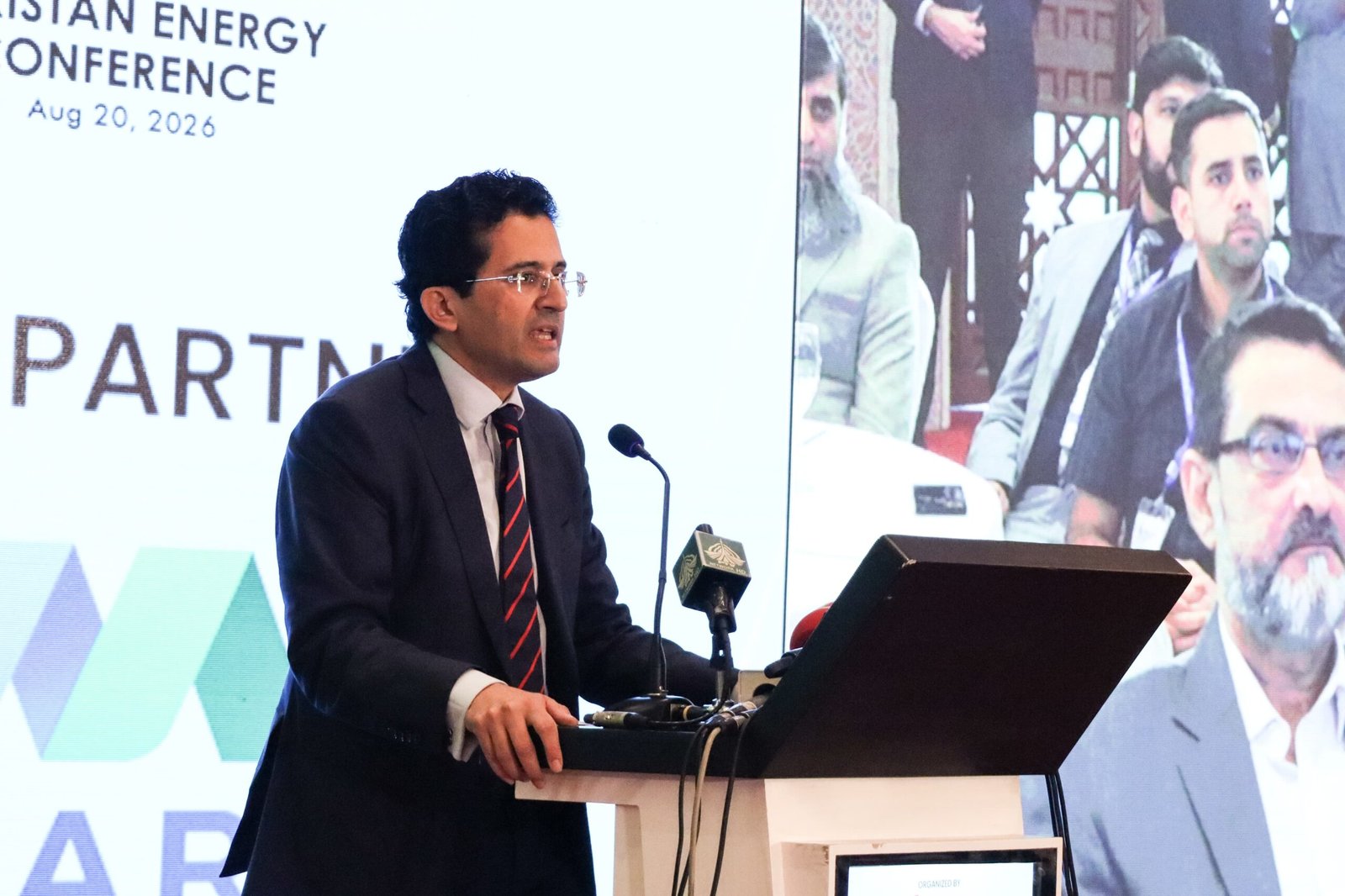
aSpeaking at the Energy Conference 2026, the minister said Petroleum Division Secretary was finalising agreements with refineries and a signing ceremony would be held shortly.
He said the government’s new refinery policy and operational flexibility were intended to address the deteriorating condition of domestic refineries and facilitate their upgradation to deep-conversion facilities.
“What we need to really get the conversation going is why they are in such a dilapidated state and why have they not been able to upgrade to deep conversion refineries,” he said.
The minister acknowledged that refineries had provided some relief by reducing diesel prices amid highly volatile international market conditions, saying they had responded positively to the government’s request.
However, he stressed that temporary relief was not sufficient and that the government needed to address the underlying structural weaknesses of the domestic refining sector.
“Why did we not do it in the last 70 years is a debate that we can have some other day, but that policy is in the field,” Ali Pervaiz Malik said, referring to the new refinery policy.
The minister’s remarks come as the government seeks to attract investment across the petroleum value chain and reduce the country’s vulnerability to external energy shocks.
He stressed the need for consistent and predictable policies to attract major investment, particularly in capital-intensive and high-risk projects.
Ali said the same principle applied to upstream exploration, particularly offshore activities, which Pakistan was reviving after two decades.
He said friendly countries, Mari Petroleum, Pakistan Petroleum Limited (PPL) and Oil and Gas Development Company Limited (OGDCL) were participating in the offshore exploration drive.
“If we expect them to invest over a hundred million dollars for one well, we must provide them consistency of policy and medium-term visibility,” he said.
He added that successful investors should be allowed to retain profits and reinvest them in developing the infrastructure required to expand the sector sustainably.
The minister said petroleum needed to be made an integral part of Pakistan’s medium-term national energy policy, with greater coordination among the petroleum, power and water divisions.
He said the reactivation of the Cabinet Committee on Energy (CCoE), chaired by Prime Minister Shehbaz Sharif, was aimed at improving coordination across the energy value chain.
Ali said he had proposed that the CCoE meet every two months, even in the absence of a specific agenda, to review developments in the energy sector.
On the broader petroleum sector, he said the Petroleum Division could not continue to shoulder excessive taxation and financial interventions merely to meet budgetary requirements, as the sustainability of the sector was equally important.
He also said the government had managed to keep the flow of circular debt at near-zero levels without increasing consumer prices.
Regarding the gas sector, the minister said the government was considering separating infrastructure from the energy business, introducing greater competition, improving liquidity in the upstream sector and enhancing efficiency.
He said a World Bank-supported report on gas-sector unbundling and reforms was expected by the end of August and would subsequently be presented to the prime minister.
The minister said deregulation and greater private-sector participation remained key government objectives and that reforms would continue despite criticism.
He said the ultimate measure of the government’s decisions would be how future generations assessed the reforms undertaken by the present leadership.
RLNG pricing dispute: KE rejects default allegation, seeks revised notifications
ISLAMABAD : K-Electric (KE) has reportedly asked the Power Division to expedite the implementation of the agreed RLNG pricing mechanism,...
Read more