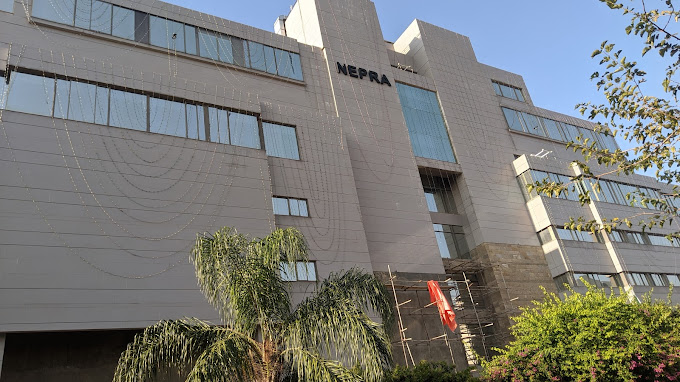
ISLAMABAD: Acknowledging good performance by the power sector companies in Health, Safety, and Environment (HSE) compliance, National Electric Power Regulatory Authority (NEPRA) has accused some companies of submitting outdated, obsolete, and repetitive records, including resubmission of previous fiscal year data.
NEPRA conducted the HSE performance evaluation for Fiscal Year 2024-25 under the mandate of clause 7.52 of the Power Safety Code, utilizing a comprehensive questionnaire, comprising of twenty common “Assessment Categories” designed to measure, gauge and benchmark HSE performance of the power sector, irrespective of company size, generation capacity, project scale, technology type, or operational configuration. The evaluation covered generation, transmission, and distribution companies, whether in the construction or operational phases.
The performance evaluation included various types of power plants such as hydel, thermal, coal, wind, solar, and nuclear power plants, along with power sector projects and stations operated or owned by organizations including Water & Power Development Authority (WAPDA), Pakhtunkhwa Energy Development Organization (PEDO), Punjab Power Development Company Limited (PPDCL), and China–Pakistan Economic Corridor (CPEC). Moreover, the evaluation also covered power stations in Azad Jammu and Kashmir (AJK) receiving tariffs from NEPRA under Power Purchase Agreements.
According to NEPRA, a majority of companies demonstrated notable improvement in HSE compliance, reflecting effective leadership and the dedicated efforts of their teams. However, a few companies participated in this regulatory-level evaluation on the basis of individual contributions rather than structured teamwork, indicating gaps in internal communication and coordination. Additionally, some companies submitted outdated, obsolete, and repetitive records, including resubmission of previous fiscal year data. Public sector organizations, on the other hand, have not established effective HSE management systems over the past five years in compliance with the Power Safety Code to control their operational and maintenance risks.
Safety remains a core regulatory priority of NEPRA while contributing to the progress of the country. Electricity poses significant hazards to humans, livestock, wildlife, and infrastructure if not controlled or managed properly. The electricity risks can result in severe consequences with the potential to trigger system instability, forced outages, cascading failures, blackouts, short circuits, arc flash incidents, fires, explosions, electric shock, severe burns, cardiac arrest, internal organ damage, serious injuries, and fatalities. This initiative reflects NEPRA’s firm and continuing commitment to advancing HSE governance, risk mitigation, and safety performance enhancement across Pakistan’s power sector. The report also captures a comparative view of HSE performance trends over the past five (5) fiscal years HSE progress, as part of NEPRA’s continual-improvement monitoring:
The Regulator is of the view that a higher ranking in this report shall not be construed or guarantee as evidence, certification, or assurance that a company’s actual performance in the field, operational controls, or workplace conditions fully align with the evaluation outcomes same as stipulated in the report. Companies classified under the “Poor or Unsatisfactory” performance category are mandated to develop and execute timely and effective corrective and preventive measures to strengthen their HSE management systems and improve occupational safety performance, ensuring full compliance with the NEPRA Power Safety Code, and all other applicable statutory, regulatory, and engineering safety requirements.
The Chief Executive Officer, Managing Director or equivalent position and/or the concerned officers/officials shall be held personally responsible and accountable for all work-related and public-related accidents whenever the Company is found or proven responsible due to negligence, violation of safety regulations/protocols, non-availability or non-compliance with SOPs, non-availability or non-compliance with PPE/T&P, supervisory failures, unsafe working conditions, faulty equipment, or defective infrastructure that the Company is responsible and accountable for planning, establishment, implementation, maintenance, monitoring, and internal and external communication of measures required to ensure safe, efficient, and reliable maintenance and operations including but not limited to construction, operation, maintenance, turnaround, rehabilitation, standby, decommissioning, mothballing, and demolition jobs. Incidents are often the results, consequences or outcomes of the HSE management system failure, either not available or not properly maintained.
NEPRA has further stated that despite the significant risks associated with the power sector, it is essential to proactively assess and control these risks to ensure national progress without hindering the power industry’s contribution to long-term sustainable development in Pakistan. Ends
Finance Minister Chairs Meeting on Gas Sector Reforms, Reviews Restructuring and Deregulation Roadmap
Federal Minister for Finance and Revenue, Senator Muhammad Aurangzeb, chaired a high-level meeting to review the proposed restructuring and deregulation...
Read more