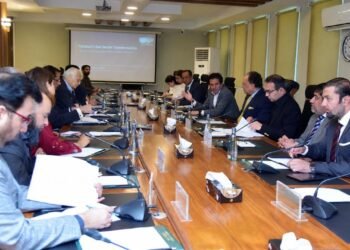
Karachi, January 2, 2026: In a year marked by return of economic stability, K-Electric (KE), Pakistan’s only vertically integrated power utility, showed steady progress across its businesses of generation, transmission, distribution, and supply, alongside continued investments in digital transformation and customer engagement.
Moonis Alvi, KE CEO, said: “K-Electric has always focused on customer satisfaction, and we will continue to facilitate our customers with utmost dedication. Karachi is our responsibility and we will continue to serve the city with all our effort.
“The revised MYT has presented new challenges, but we will balance the best of what we have to offer to both the city and the company.”
The year-end business performance round-up shows KE’s focus on ensuring reliable power for Karachi’s households, commercial hubs, and industrial units, while catering to the city’s unique operational and demand dynamics.
Peak demand
Karachi, Pakistan’s largest and most populous city, recorded a peak demand of 3,563 MW during June 2025 which was ably met with a peak supply of 3,545 MW, demonstrating KE’s grid resilience during peak summer conditions. Average demand for the year (January-November) hovered around 2,353 MW, reflecting the city’s expanding economic activity and urban growth. Monthly average demand figures fluctuated around 1,470 MW in winters and 2,920 MW during summers reflecting seasonal variations in consumption patterns.
Generation up to the task
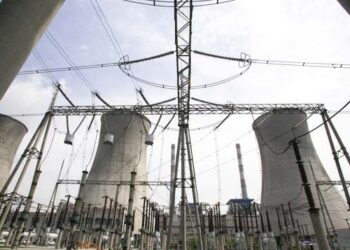
KE’s generation infrastructure played a key role in meeting Karachi’s seasonal demand variations, particularly during peak summer months when consumption rises sharply.
During 2025, KE’s generation portfolio supported the city’s growing energy landscape. The utility continued to optimise existing assets, while advancing planning and regulatory processes for future capacity additions aligned with affordability and sustainability goals.
KE also accelerated its transition to cleaner energy. Through competitive bidding, the utility secured Pakistan’s lowest renewable tariffs, ranging between PKR 8.9 and PKR 11.6 per unit for its 640 MW clean energy projects. The Bid Evaluation Reports for projects at Dhabeji, Winder, and Bela were approved by NEPRA in May 2025 and are set to add green energy to KE’s generation mix capacity over the coming years, contingent upon necessary regulatory approvals.
Transmission continues with strength
KE continued to strengthen Karachi’s power supply infrastructure and secure access to surplus, economically viable energy from the national grid. During the year, the KKI grid and its associated interconnection facilitated an increased offtake capacity of up to 2,000 MW from the national grid, enhancing the overall stability and resilience of the network alongside wheeling of cheaper power to the economic hub of the country.
Crackdown on electricity theft
KE continued to prioritise network reliability and loss reduction, while addressing challenges stemming from electricity theft and non-payment in high-loss pockets.
Over 25,000 kunda removal drives were carried out across the serviced region and nearly 320,000 kilogrammes of illegal wiring was removed till November-end.
Customer facilitation
As part of its customer-centric approach, KE also organised 310 customer facilitation camps across the city. These camps provided on-ground assistance for billing, payments, new connections, and meter-related queries.
Collectively, these initiatives contributed to recoveries amounting to PKR 409 million, reflecting the role of engagement and awareness in improving payment behaviour and service access.
Industrial, net-metered connections
Supporting Karachi’s industrial base remained a key priority during the year. KE provided 339 new industrial connections, which added a cumulative sanctioned load of 136.4 MW to the network, till November-end. These connections supported sectors including manufacturing, textiles, FMCG, ports, and export-oriented industries, reinforcing Karachi’s role as Pakistan’s economic engine.
KE also continued to facilitate customer participation in renewable energy through its net metering process. Between January and November 2025, the utility had connected 9,676 net-metered customers, adding over 230 MW in available capacity. Net metering approvals and interconnections were processed in line with prevailing regulatory frameworks, contributing to distributed generation within the city.
Digitisation
Digital transformation continued to reshape customer experience and operations. KE launched Kineto, Pakistan’s first generative AI-powered chatbot by a power utility, designed to provide instant, 24/7 support and streamline customer interactions across key service areas. The chatbot now sees nearly 3,000 chats a day on average. Billing information, outage updates, and service queries remain main queries.
KE also became one of the first power utilities in the region to implement SAP S/4HANA RISE, strengthening cybersecurity, transparency, and data-driven decision-making.
Customer engagement through digital channels rose to 2.7 million digitally connected customers, compared with 1.94 million the previous year. E-billing adoption increased to 13 percent from 8 percent, while nearly 70 percent of all bills were paid through online/alternate digital channels.
During the year, KE was also awarded top honours at the Effie Awards Pakistan 2025, securing the prestigious Grand Prix for Campaign of the Year along with a Gold Effie in the Small Budget category for its energy conservation campaign ‘Farq Parta Hai’.
Meanwhile, by the start of December, over 1.2 million customers were actively using the KE Live App, a number that stood at 1.0 million at the start of the year.
Energy Progress & Innovation Challenge (EPIC)
Committed to fostering creativity, innovation, and localisation in the energy sector, KE also held the Energy Progress & Innovation Challenge (EPIC) with the finale being held in June 2025.
It united entrepreneurs, academia, researchers, and think tanks to develop solutions for the energy sector. EPIC received over 250 entries centered around AI-driven forecasting using edge computing for improved demand prediction and smarter dispatch, machine learning–based asset health diagnostics to monitor cables and transformers and reducing outages, IoT-enabled fleet tracking for faster field operations and response times, real-time energy theft detection through AI-based anomaly identification, renewable integration models assessing PV impact, and optimising battery storage for grid stability.
MYT
During the year, KE’s Multi-Year Tariff was also approved, establishing a framework for investments, performance benchmarks, and cost recovery.
Subsequently, the determination was revised downwards by NEPRA. This revision has been challenged before the court and the same is pending adjudication. Considering the revision, company is assessing pathways to ensure reliable power supply for Karachi.
During the year, NEPRA also approved write-off claims amounting to approximately PKR 50 billion for the period FY 2017-2023, recognising these as legitimate and prudent costs following due review.
As KE moves into the new year, the utility remains focused on strengthening infrastructure, supporting industrial growth, improving recoveries, and expanding digital access, all while balancing affordability, reliability, and regulatory compliance.