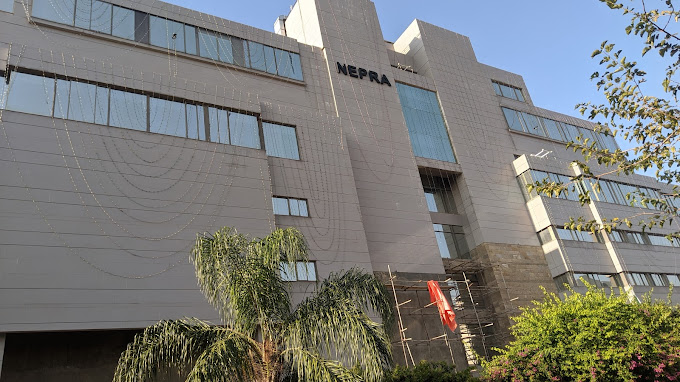
ISLAMABAD: The National Electric Power Regulatory Authority (NEPRA) has notified approved a positive Fuel Charges Adjustment (FCA) of Rs 1.42 per unit for February 2026, applicable to distribution companies (DISCOs) and K-Electric. Discos and KE will recover Rs 10.55 billion from consumers in addition to applicable taxes.
NEPRA conducted a public hearing on March 31, 2026, which was attended by officials from Central Power Purchasing Agency (Guaranteed), Power Planning and Monitoring Company, and Independent System and Market Operator. CPPA-G had sought positive adjustment of Rs 1.64 per unit.
As DISCOs and K-Electric had already recovered an FCA of Rs 1.63 per unit in March 2026, the revised FCA of Rs 1.42 per unit will result in a net relief of Rs 0.21 per unit for consumers in April bills.
During the hearing, Rehan Javed submitted—both in writing and verbally—that the industrial sector has borne an aggregate burden of Rs 564.7 billion over the past three years due to cross-subsidy and the PHL surcharge. He argued that any further increase would be unsustainable and harmful to industrial viability. He also stressed the need for transparency in FCA calculations, timely disclosure, and alignment with CPPA-G’s actual fuel procurement data.
He further noted that a reduction of Rs 0.62 per unit (effective January 2026) should be passed on to consumers without delay.
Responding to these concerns, representatives of the Ministry of Energy (Power Division) Pakistan stated that, under the NEPRA Act, tariffs are determined to reflect prudent and efficient costs of electricity supply. They explained that tariff projections are based on key variables such as fuel prices, exchange rates, demand patterns, and generation mix. However, since these variables—particularly international fuel prices and supply disruptions—are largely beyond the control of the regulator, DISCOs, and the government, any variations are passed on to consumers through the FCA mechanism in accordance with the regulatory framework.
The ministry further highlighted that, to enhance industrial competitiveness, the government has taken significant measures, including the elimination of cross-subsidy for industrial consumers, resulting in a tariff reduction of Rs 4.04 per unit. Industrial tariffs (pre-taxes) have declined from Rs 49.19 per unit (18 cents) in March 2024 to Rs 34.75 per unit (12 cents) in March 2026—a reduction of Rs 14.44 per unit.
Additionally, a three-year Incremental Consumption Package has been introduced at a concessional rate of Rs 22.98 per unit to encourage higher consumption in industrial and agricultural sectors, improve grid stability, and generate broader economic benefits such as increased output, higher revenues, improved tax collection, enhanced rural productivity, and job creation.
Another participant, Aamir Sheikh, suggested that amid RLNG shortages caused by ongoing global disruptions, local gas should be redirected to efficient RLNG-based power plants. In response, CPPA-G clarified that gas from dedicated fields cannot be diverted to other plants.
Sheikh also inquired about the expected quarterly adjustment. Representatives of CPPA-G and the Power Division stated that a reduction of around Rs 2.79 per unit (approximately Rs 48 billion) has been worked out up to February 2026. Once March data is finalised, the claim will be submitted to NEPRA for consideration.
On the possibility of advance FCA projections for March and April to facilitate export pricing, the Power Division said that due to volatility in international oil prices and evolving market conditions, it is premature to provide reliable estimates. FCA depends on the actual generation mix and dispatch, which remain dynamic and contingent on fuel availability and system requirements.
Responding to concerns about potential load-shedding, the ministry stated that DISCOs are currently meeting demand without additional outages. However, future supply conditions will depend on fuel availability and global uncertainties.
The FCA adjustment will apply to all consumer categories of K-Electric and ex-WAPDA DISCOs, except lifeline consumers, Electric Vehicle Charging Stations (EVCS), and prepaid consumers who have opted for prepaid tariffs.
Further, CPPA-G has provided data indicating that, during February 2026,33.08 GWh of energy was supplied by Small Power Producers (“SPPs”) and Captive Power Producers (“CPPs”) having bilateral arrangements with DISCOs; however, only NGC’s monthly metering/reading data reflecting such energy has been furnished, and no corresponding fuel cost has been claimed/provided along with the FCA data. It is pertinent to mention that, while approving the Power Acquisition Requests/Contracts (PARs/PACs) for such SPPs/CPPs, the Authority had prescribed an adjustment mechanism for indexation of the fuel cost component. Accordingly, since CPPAGL has not claimed any cost for the energy supplied by these SPPs/CPPs, the cost of such energy for February 2026 has been accounted for on the basis of the reference fuel cost component approved by the Authority in the respective PARs, so as to avoid accumulation of costs and a one-time burden on consumers. DISCOs are directed to submit a reconciliation of energy procured through bilateral contracts, along with a clear comparison of the cost allowed by the Authority vis-a-vis the cost verified by XWDISCOs. Any differential between the two shall be claimed through CPPAGL as part of the FCA request. Furthermore, for procurements in future months under such bilateral arrangements, DISCOs shall submit, on a monthly basis, complete details of energy and associated costs for inclusion in the respective FCA petitions.
Ends