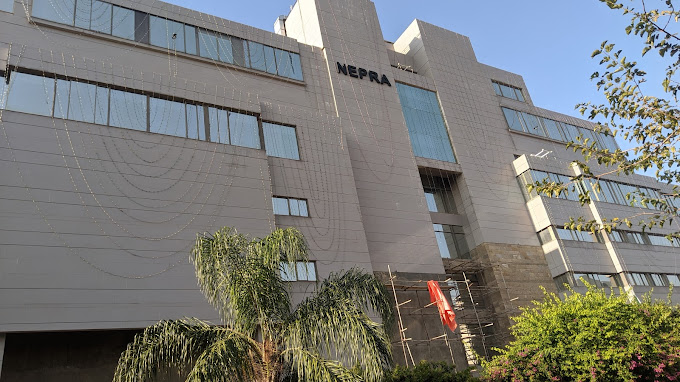
ISLAMABAD: National Electric Power Regulatory Authority (NEPRA) has, in principle, cleared the government’s plan to reduce industrial electricity tariffs by removing a cross-subsidy of Rs4.04 per kWh, a move that will place an additional financial burden of over Rs100 billion on middle and high income electricity consumers of Discos and K-Electric.
NEPRA on Tuesday conducted a public hearing on the federal government’s motion seeking the reduction of cross-subsidy amounting to over Rs101 billion for industrial consumers, aimed at making industrial tariffs competitive for both export-oriented and other industries. The hearing was chaired by NEPRA Chairman Waseem Mukhtar, along with Member (Development) Maqsood Anwar Khan and Member (Finance & Tariff) Amina Ahmed.
Representatives of industrial consumers welcomed the Prime Minister, the Power Minister, their team, and NEPRA for facilitating a reduction in industrial tariffs, terming it a step in the right direction.
Rehan Jawed, Aamir Sheikh, and Absar Ali of APTMA, along with Arif Bilwani and others, shared their views on the government’s proposal to eliminate cross-subsidy for the industrial sector. However, some consumers alleged that NEPRA was acting as a “rubber stamp” of the government and issuing directions in haste.
The NEPRA Authority rejected the impression that it was approving government proposals without due process, clarifying that it was not acting as a rubber stamp. It also addressed concerns raised by some consumers who were not given time during earlier Zoom hearings on the transition from net metering to net billing.
According to the plan presented to the regulator—which will be applicable from the current month—the government will impose fixed monthly charges ranging from Rs200 to Rs675 on over 28.5 million residential electricity consumers to generate approximately Rs101 billion.
Protected consumers using up to 100 units per month have been exempted from the Rs200 fixed charge. Under the plan, a Rs200 fixed charge will be applied to about 9.9 million consumers using less than 100 units, while a Rs300 charge will be imposed on over 6.1 million protected-category consumers using up to 200 units per month.
For non-protected consumers who exceed the 100-unit threshold even once in six months, a fixed charge of Rs275 will apply to around 5.7 million users, with their per-unit tariff rising above Rs22.44, excluding taxes.
Consumers in the 200-unit slab will face a fixed monthly charge of Rs300, affecting around 2.24 million users. The fixed charge will increase to Rs350 for 2.9 million consumers using 201–300 units, while about one million consumers using 301–400 units will pay Rs400 per month.
Approximately 400,000 consumers using 401–500 units will be charged Rs500 per month, while those consuming over 500 units will face the highest fixed charge of Rs675.
Chief Financial Officer of PPMC, Naveed Qaiser, informed the hearing that although a cross-subsidy of Rs101 billion is being removed to align industrial tariffs with regional countries and the National Electricity Policy, tariffs for domestic consumers using more than 300 units per month will decrease. He cited reductions of Rs1.53 per unit for consumers using 301–400 units, Rs1.25 for 401–500 units, Rs1.40 for 501–600 units, Rs0.91 for 601–700 units, and Rs0.49 per unit for consumption above 700 units. Time-of-Use (ToU) consumers will see a reduction of Rs4.76 per unit.
Member (Development) NEPRA cautioned that domestic consumers should not face “double jeopardy” due to the elimination of cross-subsidy followed by higher Fuel Cost Adjustment (FCA) or Quarterly Tariff Adjustment (QTA) arising from the operation of expensive power plants to supply electricity to industry.
Qaiser maintained that domestic consumers would benefit from the plan, stating that multiple analyses supported this claim. “We have not shifted the industry’s burden onto domestic consumers. The cost burden remains with industrial and commercial consumers, as their high tariffs are pushing them off the grid, which would otherwise increase the burden on domestic users,” he said.
Additional Secretary Power Division (Power Finance) Mehfooz Bhatti informed the Authority that the government is still providing Rs629 billion in subsidies to domestic consumers, emphasizing the need for gradual rationalization.
The Authority was also told that tariffs across various consumer segments had declined by 20 percent to Rs42.60 per unit in February 2026 from Rs53.04 per unit in March 2024. Domestic tariffs fell by Rs6.77 per unit (16 percent), commercial by Rs5.53 (7 percent), general services by Rs5.89 (10 percent), industrial by Rs20.24 (32 percent), bulk by Rs7.65 (12 percent), agricultural by Rs6.41 (13 percent), AJK by Rs27.08 (44 percent), and others by Rs5.96 per unit (10 percent).
However, Power Division officials appeared hesitant to acknowledge that the cross-subsidy for industry had been entirely eliminated.
Concluding the hearing, NEPRA Member (Law) described the decision as a step in the right direction despite being a tough call. She noted that the move would have been more effective had it been implemented prior to the annual tariff rebasing.
She also expressed reservations about the Power Division’s claim regarding reduced domestic tariffs, stating that the real impact would become clear once consumers received their electricity bills. While acknowledging that removing cross-subsidy from one segment inevitably affects others, she emphasized that the decision was necessary, as industry had long demanded relief. Ends
No change in rates of existing net metering facility
ISLAMABAD: The National Electric Power Regulatory Authority (NEPRA) has issued a new notification ensuring that existing net metering rates for...
Read more