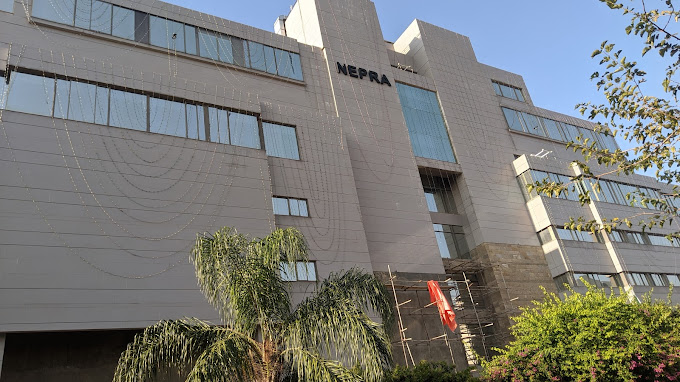
ISLAMABAD: NEPRA in its State of Industry Report 2024-25 has said that K-Electric (KE) has no role in the accumulation of circular debt, but it’s consumers are nonetheless paying a Debt Servicing Surcharge (DSS) of Rs3.23 per kWh.
NEPRA stated that despite determining consumer-end tariffs in a manner that fully covers the revenue requirements of all entities across the power supply chain, persistent structural inefficiencies and the historical poor performance of distribution companies (DISCOs) leave little reason to expect that circular debt can be sustainably controlled.
The regulator explained that if NEPRA-determined tariffs were fully implemented and all sector entities met prescribed performance targets, each entity’s financial obligations would be met and circular debt would not arise. However, in practice, several power sector entities fail to achieve these targets due to weak governance, poor recovery performance, and high technical and commercial losses, resulting in insufficient revenue collection and the continued accumulation of circular debt.
As of June 30, 2025, circular debt in Pakistan’s power sector stood at approximately Rs1.614 trillion, compared to Rs2.393 trillion a year earlier, reflecting a reduction of around Rs780 billion. NEPRA noted, however, that this decline does not represent a structural improvement and mirrors similar short-term reductions seen in the past.
According to NEPRA, both current and previous declines in circular debt primarily resulted from external financial injections rather than from meaningful sector reforms. During FY 2024-25, DISCO inefficiencies contributed approximately Rs265 billion through excessive T&D losses and Rs132 billion due to low recovery ratios. Despite these shortcomings, the overall circular debt figure declined during the year.
NEPRA attributed this reduction to the Government of Pakistan securing commercial financing to retire liabilities of Power Holding (Private) Limited (PHPL) and clear arrears owed to Independent Power Producers (IPPs). While this intervention temporarily lowered circular debt, it failed to address the sector’s underlying inefficiencies.
To service the cost of this borrowing, most electricity consumers—excluding a few protected domestic categories—are now required to pay an additional Rs3.23 per kWh under the Debt Servicing Surcharge for several years. NEPRA noted that this surcharge effectively transfers the burden of sector inefficiencies to consumers and represents one of the largest components of the end-user tariff, after the Capacity Purchase Price (CPP) and Energy Purchase Price (EPP).
NEPRA further stated that KE, the country’s only private-sector distribution company, does not contribute to circular debt, as it absorbs the financial impact of higher losses and lower recoveries instead of passing these costs on to consumers. Despite this, KE consumers remain subject to the DSS. To date, KE has collected and remitted Rs35.76 billion under the DSS to the Government of Pakistan and CPPA-G.
The regulator observed that had public-sector DISCOs been privatized in line with the 1992 power sector reform strategy, trillions of rupees in losses could have been avoided, and consumers would have benefited from improved service quality. NEPRA added that although challenges to privatization persist even after more than two decades, these hurdles can be overcome through well-designed strategies and firm political commitment.
Given the prevailing structural inefficiencies and the historical performance of DISCOs, NEPRA concluded that there is little justification to expect sustainable control of circular debt or lasting improvements in the power sector under the existing framework. Ends
ECC clears revised pacts with 13 wind, 1 solar power projects
ISLAMABAD : In a major step towards power sector reforms, the Economic Coordination Committee (ECC) of the Cabinet has approved...
Read more