ISLAMABAD: The government has decided to deploy joint teams comprising representatives of the Petroleum Division, Oil and Gas Regulatory Authority (OGRA), Federal Investigation Agency (FIA), and Pakistan State Oil (PSO) at selected PSO petrol pumps in Islamabad to support timely data entry, enhance stock transparency, and ensure operational compliance.
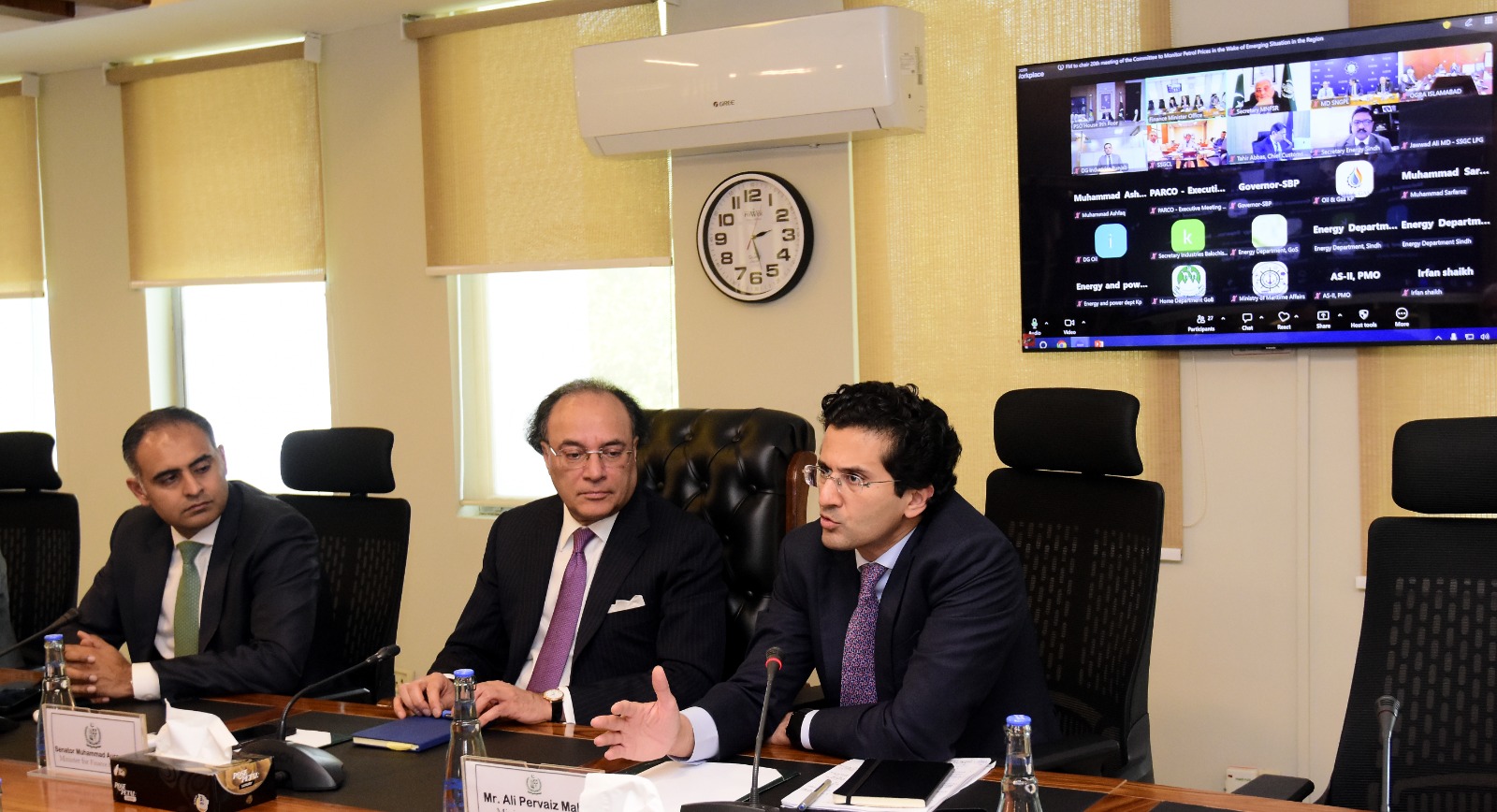
The decision was taken at a meeting of the Cabinet Committee to Monitor Petrol Prices, held on Monday under the chairmanship of Federal Minister for Finance and Revenue, Senator Muhammad Aurangzeb. The meeting reviewed the petroleum supply situation and market conditions following the recent price adjustment, with a focus on ensuring supply continuity, maintaining market discipline, and strengthening monitoring mechanisms across the supply chain.
The committee undertook a comprehensive review of petroleum stock positions, import plans, and refinery operations. Members were informed that the overall supply situation remains stable, with diesel stocks sufficient for approximately 25 days, petrol stocks adequate to meet current demand, and crude oil inventories covering around 12 days, supported by incoming cargoes and scheduled imports.
The Petroleum Division informed the committee that import arrangements for the coming weeks are on track through a mix of commercial procurement and government-to-government engagements. Refineries are operating at optimal levels to maintain throughput and ensure efficient conversion of crude into refined products.
The committee highlighted the importance of reliable energy supply in supporting key sectors such as agriculture, fertilizer production, transportation, and industry, noting its critical role in sustaining economic activity and maintaining price stability.
In light of recent price movements, the committee stressed the need for continued vigilance to prevent hoarding, speculative behavior, and any disruption in product availability. It also emphasized close monitoring of demand patterns, including localized consumption trends, to ensure balanced supply management. The need to discourage unauthorized storage and address market irregularities within the regulatory framework was also underscored.
The meeting also reviewed the gas supply situation, including stock positions of SNGPL and SSGC, and discussed options for managing gas availability for domestic consumers as well as allocation between domestic and power sectors. Members called for a balanced, data-driven approach to ensure efficient resource utilization, particularly in view of seasonal demand and increasing reliance on LPG.
The committee placed particular emphasis on strengthening monitoring and data-driven oversight through OGRA’s digital dashboard, designed to provide real-time visibility of stock levels, sales, and supply conditions from depots to retail outlets. The dashboard is expected to serve as a central tool for tracking key indicators, enabling timely identification of supply gaps and informed decision-making.
While acknowledging progress, the committee noted that data reporting from retail outlets remains below expectations, especially given the scale of more than 12,000 petrol pumps nationwide. It stressed the need to fully operationalize the system to achieve its intended benefits.
The finance minister directed all stakeholders to ensure timely and accurate data sharing to support effective use of the dashboard. OGRA was instructed to enforce compliance with reporting requirements, accelerate digitization across the supply chain, and maintain close coordination with oil marketing companies (OMCs) and other stakeholders. In this regard, PSO will enhance visibility across its retail network and improve reporting coverage on a priority basis.
To reinforce implementation, the committee approved deployment of joint teams at selected PSO petrol pumps in Islamabad to support data entry, improve transparency, and ensure compliance. It emphasized institutionalizing such mechanisms to strengthen oversight, enhance accountability, and promote consistency in reporting practices.
Chairing the meeting, the finance minister reiterated that maintaining market stability requires proactive coordination, effective monitoring, and consistent enforcement. He stressed that ensuring uninterrupted fuel availability, improving transparency, and protecting consumers remain key priorities, while also encouraging responsible consumer behavior.
The meeting was attended by Federal Minister for Petroleum Ali Pervaiz Malik, Federal Minister for Climate Change and Environmental Coordination Dr Musadik Masood Malik, Federal Minister for National Food Security and Research Rana Tanveer Hussain (via video link), Federal Minister for Maritime Affairs Muhammad Junaid Anwar Chaudhry (via video link), and Federal Minister for Power Sardar Awais Ahmad Khan Leghari (via video link), along with senior officials from relevant ministries, divisions, and regulatory authorities. Ends

OGRA’s new PDC verification rules trigger concern among OMCs
ISLAMABAD: A recent directive issued by Pakistan’s Oil & Gas Regulatory Authority (OGRA) has sparked concern across the oil marketing...
Read more