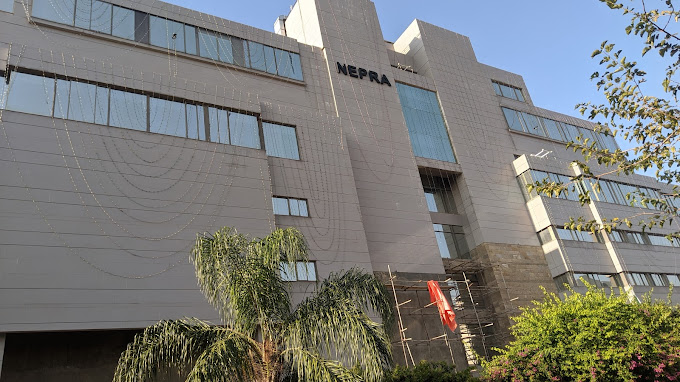
ISLAMABAD: The National Electric Power Regulatory Authority (NEPRA) has issued a notification for the Prosumer Regulations, 2026, marking a transition from the existing net metering mechanism to a net billing framework.
Under these regulations, a prosumer may be a homeowner with rooftop solar panels, a farmer operating a biogas plant, or an industrial facility running wind turbines. As long as the power generation facility is clean and has a capacity of up to one megawatt, it qualifies to participate in this new energy partnership.
However, becoming a prosumer involves more than simply installing generation equipment. A defined approval process must be followed.
Any interested person must first apply to their local electricity distribution company, referred to as the licensee. The licensee is required to provide guidance, supply application documents free of cost, and process the application in a fair and timely manner. For larger systems, technical studies may be conducted to ensure that the distribution grid can safely accommodate the additional power.
Once the application is complete, the licensee assesses whether the proposed system can be safely interconnected with the grid. If interconnection is not feasible, the applicant must be informed of the reasons. If approved, both parties enter into a formal agreement, officially recognizing the applicant as a prosumer.
Before electricity can be supplied or exported, NEPRA must grant formal approval, known as concurrence. This ensures compliance with national safety, technical, and legal standards. If a prosumer fails to proceed within a reasonable time after receiving concurrence, a fresh application may be required.
After interconnection, the relationship between the prosumer and the licensee operates as a regulated partnership. The licensee is responsible for facilitating the connection, installing appropriate meters, and ensuring accurate billing. The prosumer must operate the generation facility responsibly, comply with safety standards, and avoid any interference with grid operations.
Electricity flows in two directions under this arrangement. If the prosumer consumes more electricity than they generate, consumption is billed at the applicable tariff. If generation exceeds consumption, the surplus electricity is purchased by the licensee at the national average energy purchase price. Billing adjustments are carried out monthly, and any surplus amount is credited to the next billing cycle or paid quarterly.
The agreement between the prosumer and the licensee is valid for five years and may be renewed by mutual consent. Either party may terminate the agreement with proper notice and approval; however, all accrued rights and obligations remain enforceable.
Strict technical and safety standards apply to ensure grid stability. Voltage and frequency must remain within prescribed limits, and appropriate protective equipment must be installed. Disconnect switches must be provided for emergency isolation. In cases of interference or safety risks, the licensee may temporarily disconnect the system to safeguard reliability.
NEPRA remains the overarching authority overseeing this framework. It may issue directions, seek information, resolve disputes, impose penalties, relax provisions where justified, and ensure effective implementation. When older regulations no longer meet evolving needs, NEPRA may replace them while ensuring a smooth transition.
Through these regulations, Pakistan’s electricity grid evolves from a one-way supply system into a shared network—empowering citizens as energy partners, strengthening the role of clean energy, and supporting a more sustainable future.
Metering Requirements: Metering equipment must accurately measure electricity flow in both directions. Where two separate meters are installed, the calculated energy results must be equivalent to those obtained using a single meter.
The interconnection facility, including meters, must comply with all safety and protection standards approved by the Authority.
Meter readings shall preferably be carried out through Hand-Held Units (HHUs) or automated systems, as directed by the Authority from time to time.
Billing: At the end of each billing cycle following interconnection: (i)electricity supplied by the licensee to the prosumer shall be billed at the applicable tariff and ;(ii) electricity supplied by the prosumer to the licensee shall be billed at the national average energy purchase price.
Explanation: A net billing arrangement refers to a system under which electricity generated by a prosumer is purchased by the licensee, while the prosumer is billed for consumption at the applicable tariff after adjusting for credited energy supplied to the licensee.
If the value of electricity supplied by the prosumer exceeds the value of electricity consumed, the net amount shall be credited to the next billing cycle or paid quarterly.
The Authority may revise applicable rates during the term of the agreement through notification, and any revised rate shall be deemed incorporated into the agreement.
Regulatory Powers: The Authority may issue directions, instructions, and guidelines to prosumers and licensees for effective implementation.
Such directions may be modified or withdrawn by the Authority on its own motion or upon representation.
The Authority may require any information from licensees or prosumers at any time.
Any dispute arising between a prosumer and a licensee shall be referred to the Authority for resolution.
Non-compliance with these regulations or related directives may result in penalties as provided under the Act. The Authority may relax any provision of these regulations for recorded reasons after providing an opportunity of hearing.
The Authority may issue orders to remove any difficulty in implementing these regulations.
Savings and Repeal: The NEPRA (Alternative & Renewable Energy) Distributed Generation and Net Metering Regulations, 2015 stand repealed upon the commencement of these regulations.
Agreements executed under the repealed regulations shall remain valid; however, billing shall transition to net billing in accordance with these regulations. Existing distributed generators shall continue to be billed at the national average power purchase price until the expiry of their agreement, after which the national average energy purchase price shall apply to all renewals.
Upon expiry or extension of existing agreements, all arrangements shall be brought into conformity with these regulations. Ends