ISLAMABAD: The National Electric Power Regulatory Authority (NEPRA) and representatives of the domestic industry on Thursday voiced unanimous concern over the existing power sector structure, citing inefficiencies and poor recoveries as major reasons behind the rising cost of electricity.
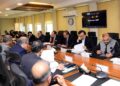
This rare consensus emerged during a public hearing on the Quarterly Tariff Adjustment (QTA) for power distribution companies (Discos) for the July–September period of fiscal year 2025–26. The hearing was chaired via Zoom by NEPRA Chairman Waseem Mukhtar, while Member (Development) Maqsood Anwar Khan, Member (Law) Amina Ahmad, and Member (Technical) Rafique Ahmad Shaikh also attended.
The Discos have sought a positive adjustment of up to 50 paisa per unit to recover an additional Rs 8.41 billion from consumers of K-Electric and other distribution companies for the quarter under the QTA mechanism.
Except for the HESCO, PESCO, and TESCO, the Discos collectively sought recovery of Rs 21.7 billion from consumers. However, a major portion of capacity charges was offset by a negative adjustment of Rs 13.29 billion due to the impact of variable O&M charges, Use of System Charges, Market Operator Fees, and T&D losses on monthly Fuel Cost Adjustments (FCA).
Company-wise, the proposed adjustments are as follows: IESCO: +Rs 1.151 billion, LESCO: +Rs 8.453 billion, GEPCO: +Rs 4.226 billion, FESCO: +Rs 2.337 billion, MEPCO: +Rs 4.347 billion, PESCO: –Rs 120 million, HESCO: –Rs 3.212 million, QESCO: +Rs 1.772 billion, SEPCO: +Rs 1.528 billion, TESCO: –Rs 254 million, and HAZECO: +Rs 1.474 billion.
During the hearing, Rehan Jawed, representing the Federation of Pakistan Chambers of Commerce and Industry (FPCCI), raised strong objections to the proposed increase, calling it “anti-industry.”
“We are speaking for the entire industry, not just ourselves. Expenses are rising while sales are declining, and the burden on both industry and the public keeps increasing,” he said.
Mubashir Bhatti, Director (Tariff) NEPRA, responded that the issues raised by the industry were mainly related to the government subsidies. He asked whether any representative from the Power Division was available to address these concerns, but none was present.
He said that the Discos’ recovery and losses are key components of circular debt. He said that the contribution under recovery and losses inefficiency were Rs 84 billion and Rs 87 billion respectively during the first quarter of fiscal year 2025-26.
Jawed requested NEPRA to arrange an interactive session between the industry and the Power Division to discuss the issues of subsidies and circular debt, emphasizing that the proposed Rs 0.50 per unit increase is unacceptable.
“The cost of doing business is once again rising, and the much-publicized Prime Minister’s package offers no real relief. The industry must be involved in tariff-related decisions; otherwise, we will not be able to sustain operations,” he warned.
Taking notice of the absence of Power Division officials, Member (Development) Maqsood Anwar Khan directed that a displeasure note be issued to the Power Division on behalf of the Authority. He also instructed NEPRA’s technical team to obtain answers to the industry’s questions.
Member (Technical) Rafique Ahmad Shaikh clarified that NEPRA had never claimed that circular debt would not increase.
“If someone from the government claimed that circular debt would be eliminated, he should be asked to prove his claim,” he remarked.
“Under the current structure, expecting a reduction —let alone elimination—of circular debt is unrealistic unless losses are curtailed and recoveries improve,” Rafique Shaikh maintained.
Industry representatives further urged NEPRA to ask the Power Division to refrain from asserting that “no additional burden” has been imposed on consumers. They noted that the Debt Service Surcharge (DSS) of Rs 3.23 per kWh remains a heavy burden and will continue for the next six years.
“To whom should we present our grievances? No one listens. NEPRA is the only forum where we can raise these issues, but no meaningful action is taken,” lamented Jawed.
Tanveer Barry, representing the Karachi Chamber of Commerce and Industry (KCCI), questioned the sharp increase in capacity charges, noting that they had swung from a negative Rs 47–53 billion last year to Rs 21 billion positive this year.
“The Prime Minister’s relief package of Rs 7.69/kWh was passed on temporarily through quarterly adjustments and TDS, but now both QTA and FCA are turning positive again. Consumers could face an additional burden of Rs 8–10/kWh,” he said.
He added that the Prime Minister had announced a new incremental package for industrial and agricultural consumers, but its details remain unclear. Barry also questioned the government’s claim of saving Rs 3,600 billion through negotiations with IPPs, asking what tangible benefit had reached consumers.
“Daytime demand is dropping while nighttime demand is rising because consumers are switching to solar. They know no real tariff relief is coming,” he observed.
He noted that circular debt rose by Rs 79 billion in the first quarter, and while the government borrowed funds to reduce it, consumers are still paying the Rs 3.23/kWh surcharge, meaning “future generations will continue bearing this burden.” “NEPRA should reject the proposed positive adjustment, order an independent audit, and withhold any approval until the final report,” he concluded. Ends