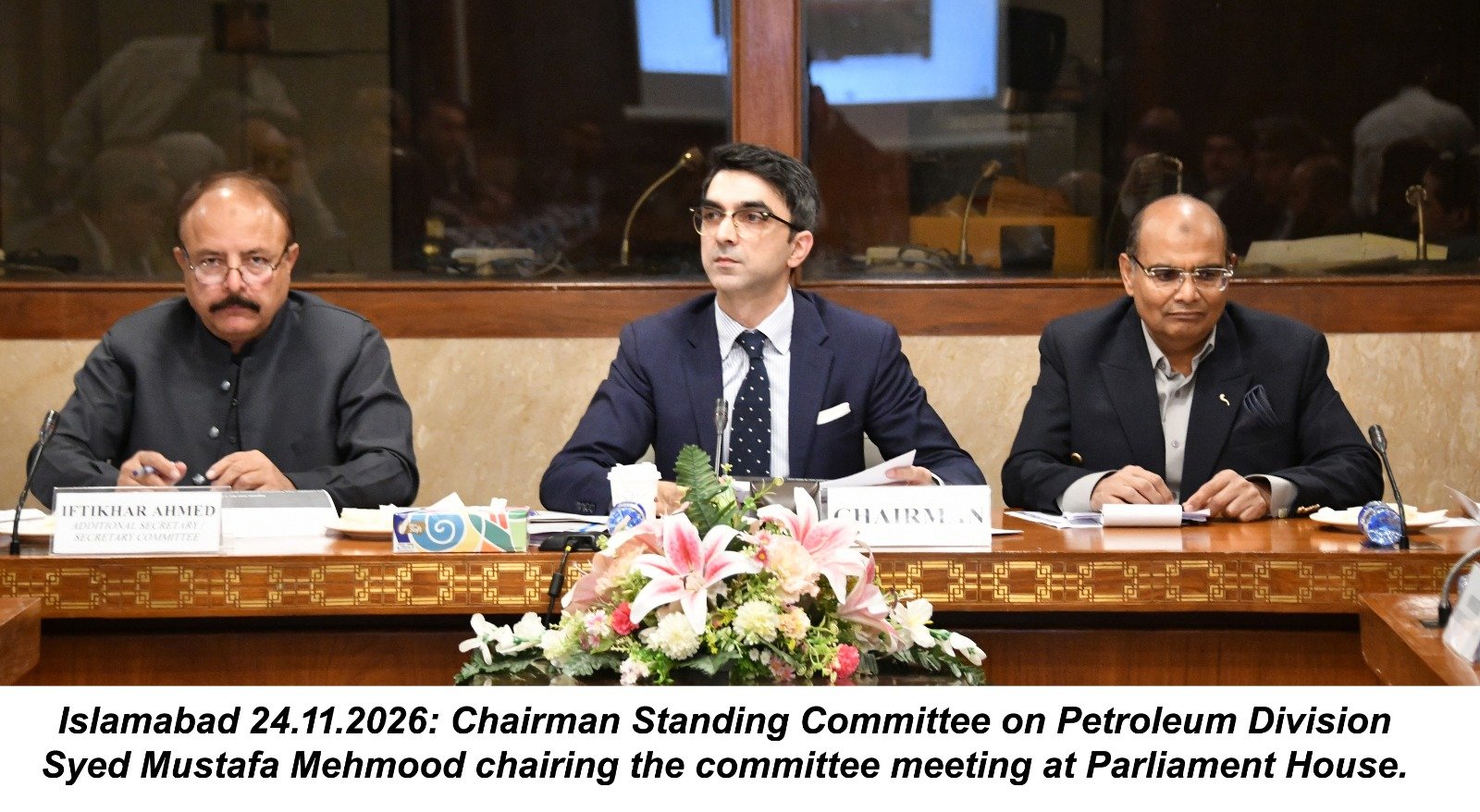
ISLAMABAD: The National Assembly Standing Committee on Petroleum on Tuesday deferred consideration of the Gas Development Surcharge Amendment Bill 2026 and the Gas Infrastructure Development Cess (GIDC) Amendment Bill 2026 following objections raised by committee member Syed Naveed Qamar.
The committee chairman, Syed Mustafa Mehmood said a major political party had reservations over both bills, therefore, their consideration was postponed.
Meanwhile, the committee took up the Petroleum Levy and Climate Support Levy Amendment Bill 2026, which seeks to ensure timely collection of petroleum and climate support levies from oil refineries.
Briefing the committee, the Director General Oil said the proposed amendments were aimed at ensuring effective collection of the levies. Petroleum Minister Ali Pervaiz Malik informed the committee that the petroleum levy on both petrol and diesel currently stood at Rs80 per litre each.
He said refineries were also bearing the burden of the levy under the existing arrangement and should deposit the government dues in a timely manner.
Under the proposed amendments, refineries would be required to deposit petroleum and climate support levies before petroleum products leave their gates.
However, Syed Naveed Qamar questioned the proposed mechanism, arguing that it would place an additional financial burden on refineries. He said refineries might not readily accept the arrangement and questioned whether the government had consulted them before introducing the proposed legislation.
The Petroleum Minister responded that, apart from two members, nobody had raised objections to the proposal. He maintained that refineries should deposit the government dues on time and that the new mechanism would prevent government money from remaining with refineries.
The proposed legislation also provides for penalties in case of delays in depositing petroleum and climate support levies by refineries.
Under the proposed amendments, licences of companies failing to deposit the levies could also be cancelled, while defaulting companies and responsible persons could face financial penalties and imprisonment.
The committee chairman expressed reservations over the proposed punishment provisions, particularly the provision for imprisonment of up to three years.
He questioned who would be held responsible for the default and whether a defaulter could still face imprisonment even after depositing the outstanding amount along with interest and penalties.
He observed that the proposed legislation did not clearly specify these aspects and stressed that lawmaking should be transparent.
The DG Oil informed the committee that the matter could be covered through rules. However, the chairman insisted that the draft legislation itself needed corrections and clarity.
Asad Alam Niazi also emphasised the need to clearly determine responsibility in cases of default in depositing the levies.
The committee also examined issues relating to the sale and distribution of Light Diesel Oil (LDO), raising concerns about its possible diversion from its designated uses.
The chairman sought complete details of the LDO supply and distribution system, including whether refineries were supplying the product in drums and how many petrol pumps were selling it.
Officials informed the committee that oil marketing companies procured LDO from refineries and supplied it to agencies, while kerosene oil and LDO were also sold through small shops and agencies.
The officials said details of LDO sales and distribution would be obtained from oil marketing companies.
The chairman expressed apprehension that the overall consumption of LDO might not be serving its designated purposes. He alleged that mini-refineries were filtering LDO and subsequently selling it again through petrol pumps.
He also questioned where the LDO allocated for tractors was actually being consumed and sought details of its genuine end-users.
The chairman observed that the use of unsuitable LDO could lead to carbon accumulation in tractor engines and damage to fuel pumps. Officials, however, explained that tractors required fuel according to their specific technical and engine requirements.
The committee directed that a survey be conducted to establish the actual number of LDO consumers and sought comprehensive data on its sales, quantities and distribution to end-users.
It also stressed the need to examine the quality of LDO and assess its potential adverse effects.
The committee chairman also raised concerns over the gas supply situation in Balochistan, observing that the province was already facing multiple challenges and was now experiencing a gas low-pressure crisis.
He sought details of measures being taken by the government to improve gas pressure and ensure adequate supplies to consumers in Balochistan.
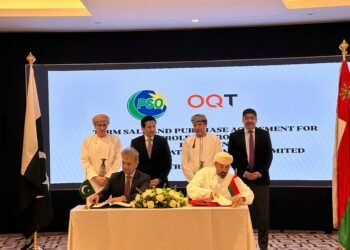
Pakistan, Oman Sign SPA; PSO Secures $200m Credit Facility
ISLAMABAD: Pakistan and Oman have agreed to strengthen bilateral cooperation in the oil, gas and minerals sectors, with Pakistan State...
Read more