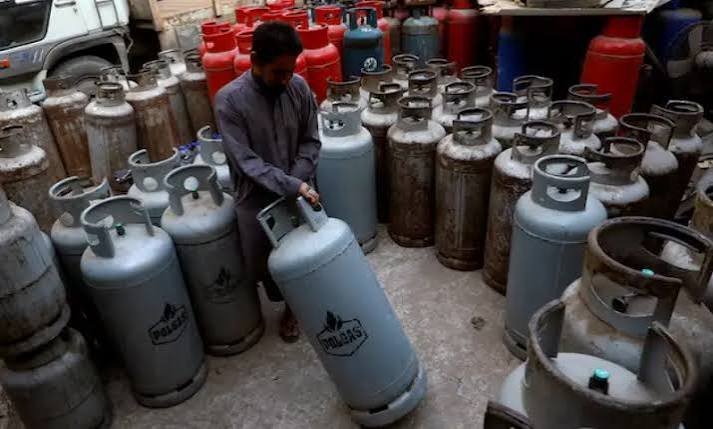
ISLAMABAD: The government is planning a major overhaul of the liquefied petroleum gas (LPG) pricing and marketing regime, proposing to replace the existing OGRA-administered pricing mechanism with an import-parity-based system under which state-owned entities (SoEs), including Pakistan State Oil (PSO), Sui Southern LPG Limited (SLL) and Pakistan LNG Limited (PLL), will take the lead in determining monthly market reference prices.
Under the proposed guidelines, PSO, SLL and other state-owned companies will import LPG in bulk and announce monthly reference prices based on the Saudi Aramco Contract Price (CP), together with actual import-related costs, including premiums, freight, insurance, incidental expenses and applicable import taxes.
The proposed framework envisages a gradual transition towards import-parity pricing in the first phase, with the objective of ensuring that LPG supplies are imported through legal channels, improving transparency in price discovery, encouraging participation by larger market players and introducing competition in the downstream LPG market.
A significant change proposed in the new mechanism is that the Oil and Gas Regulatory Authority (OGRA) will discontinue issuing monthly consumer price notifications for both locally produced and imported LPG once the guidelines are approved. The November 2026 LPG price notification already issued by OGRA will also be revised accordingly.
However, OGRA will continue issuing monthly notifications of producer prices linked to the Saudi Aramco CP (FOB), adjusted according to the propane-butane ratio.
The proposed reforms also envisage winding up the LPG Pricing Committee constituted by the Federal Cabinet in 2017, as the government believes that the new import-parity mechanism will provide an objective benchmark for LPG prices without requiring a separate committee to determine rates for notification by OGRA.
According to the proposed guidelines, the monthly reference price announced by PSO and/or SLL will reflect the average landed cost of LPG imported during the preceding month. The price will comprise the FOB value linked to Saudi CP, actual import premiums, freight costs on a CFR basis, insurance, incidental expenses and import taxes.
The state-owned entities will publish these components on their respective websites to provide market participants with a reference for pricing.
The proposal also seeks an exemption from publishing financial bids received by PSO, SLL and PLL on the Public Procurement Regulatory Authority (PPRA) website, arguing that non-publication of individual financial offers is consistent with general market practice and necessary to encourage greater participation by large market players.
New mechanism for indigenous LPG pricing
Under the proposed arrangement, OGRA will notify the monthly producer price linked to the prevailing Saudi Aramco CP (FOB), adjusted according to the propane-butane ratio.
Domestic producers, including exploration and production companies and refineries, will be entitled to receive only the notified producer price.
Any difference between the producer price and the bid price discovered through the competitive process will be deposited into a dedicated Producer-Price Differential Fund.
The guidelines propose that indigenous LPG, except for the portion allocated to state-owned marketers, should be disposed of through transparent competitive auctions.
Ten percent of LPG produced by exploration and production companies, refineries and other producers will be allocated to state-owned marketers at the notified producer price.
This allocation is intended to guarantee supplies to Northern Areas, Gilgit-Baltistan and other remote, hilly and hard-to-reach areas across the country, where LPG is required for domestic consumption through cylinders and already-installed LPG air-mix plants.
The remaining 90 percent of indigenous LPG will be sold through transparent quarterly auctions in parcels ranging from 5 to 10 metric tonnes.
The proposed guidelines provide that the floor price for these auctions will be determined by the relevant committee but cannot be lower than 75 percent of PSO’s import-parity price, with safeguards against cartelisation.
Where PSO does not import LPG during a particular month, the import-parity price of SLL will serve as the base or reference price.
If neither PSO nor SLL imports LPG during a month, the pricing mechanism provided under the non-import clause will apply. Under this provision, the premium, incidental expenses and taxes of the preceding month will be applied with the current month’s Saudi CP.
A special arrangement has also been proposed for Pakistan Arab Refinery Company (PARCO). It may allocate 75 percent of its 90-percent auctionable share to its subsidiary, PARCO Pearl Gas Limited (PPGL), while the remaining 25 percent will be disposed of through transparent monthly auctions.
However, the price charged to PPGL for the allocated LPG will not be lower than the price discovered through competitive auctions.
Producer-Price Differential Fund to finance targeted subsidies
One of the important features of the proposed reforms is the establishment of a Producer-Price Differential Fund to capture the difference between the notified producer price and the bid price discovered through competitive auctions.
The amount will be collected by refineries or producers, as applicable, and deposited into a dedicated account maintained in the Public Account under the Public Financial Management Act 2019 and relevant rules.
The government intends to utilise this fund for two purposes: providing targeted subsidies to vulnerable LPG consumers and stabilising LPG prices when required.
Domestic consumers meeting the Benazir Income Support Programme (BISP) eligibility criteria or the Proxy Means Test (PMT) cut-off approved by the Federal Government will qualify for assistance from the fund.
The eligibility criteria will be reviewed annually.
The fund will be audited by the Auditor General of Pakistan to ensure financial accountability and transparency.
Petroleum Division will issue detailed operational guidelines for the fund within one month of approval of the proposed framework, in consultation with the Ministry of Finance, BISP and other relevant stakeholders.
The guidelines also require Petroleum Division to develop an appropriate legal instrument in consultation with the Ministry of Law and Justice and the Ministry of Finance to provide the necessary legal basis for the fund.
Downstream margins to be determined by market players
Another major change concerns the determination of downstream margins and transportation costs.
Under the existing regulated pricing arrangements, OGRA has played a central role in determining LPG prices. However, the proposed framework envisages that LPG importing and marketing companies will determine their own appropriate margins and freight costs.
The government believes that allowing companies to determine downstream margins will encourage competition, attract investment and improve efficiency across the LPG supply chain.
The proposed mechanism will, however, operate alongside competition and regulatory safeguards.
The Competition Commission of Pakistan (CCP) will be the lead agency responsible for taking action against collusive practices and cartelisation by LPG sector players.
OGRA, as the sector regulator, will also take action against companies involved in collusive practices under its applicable rules, regulations and licence conditions to protect consumers.
Petroleum Levy, Federal Excise Duty (FED), Sales Tax and any other government-imposed taxes and levies will continue to apply in accordance with the law.
Government to establish committee for supply-demand management
To ensure uninterrupted LPG supplies, particularly during winter, the proposed guidelines envisage the establishment of a high-level committee under the chairmanship of the Secretary Petroleum.
The committee will comprise the Chairman OGRA, Managing Director OGDCL, Managing Director PSO, President UEP and Director General LPG.
Petroleum Division, in consultation with OGRA, may convene product review meetings to assess the overall supply-chain position, import requirements and winter stock planning.
The committee may also recommend or instruct specific import volumes to state-owned importers and marketers to maintain an appropriate supply-demand balance.
In addition to monitoring supplies, the committee will periodically review and adjust the floor price for LPG bidding, determine the periodicity of auctions and establish other terms and conditions required for transparent market operations.
It will also work towards standardisation of contracts to improve transparency and reduce disputes in LPG transactions.
PSO and SLL to become national import backstop
The proposed framework seeks to give PSO and SLL a more prominent role in ensuring the security of LPG supplies.
These entities may be authorised to enter into long-term and government-to-government supply arrangements, following the model of the KPC arrangement for high-speed diesel.
The objective is to establish state-owned companies as the national import backstop under the guidance of Petroleum Division.
This arrangement is intended to ensure that the country has reliable access to imported LPG, particularly during periods of seasonal shortages or disruptions in international supply chains.
State-owned entities may also develop additional storage and handling facilities or contract private-sector infrastructure.
In the interim, they will be facilitated in accessing existing LPG import terminals and storage facilities to ensure adequate import capacity.
40,000-tonne LPG terminal proposed at Port Qasim
The proposed reforms also place considerable emphasis on expanding Pakistan’s LPG import infrastructure.
The government is considering allocation of land and berth facilities at Port Qasim for the development of a 40,000-tonne LPG import terminal.
The first phase would involve establishing storage capacity of 10,000 to 12,000 tonnes on land with access to the Sui Southern Gas Company (SSGC) jetty.
However, the existing SSGC LPG jetty has a draft of only 10 metres, restricting the size of vessels that can be received.
According to the proposed guidelines, receiving larger LPG cargoes of 20,000 to 25,000 tonnes would require expansion of the jetty and dredging.
The government has proposed a bankable feasibility study to compare two options: dredging the Port Qasim approach channel to accommodate vessels of approximately 25,000 deadweight tonnes (DWT), or developing a very large gas carrier (VLGC)-capable jetty with a refrigerated LPG terminal.
The feasibility study is expected to help determine the most commercially viable option for expanding the country’s LPG import infrastructure.
Until additional infrastructure becomes available, state-owned entities may be provided access to existing terminals and storage facilities.
OGRA to tighten licensing and marketing requirements
The proposed guidelines also envisage significant changes in the regulatory framework governing LPG marketing companies, transportation, storage and distribution.
OGRA will be required to consolidate LPG marketing licences through the introduction of investment thresholds and third-party audits.
The objective is to ensure that only financially and operationally capable companies remain active in the market.
The regulator will also be required to conduct regular audits of each licensee’s reported sales volumes against its licensed storage capacity, cylinders and filling infrastructure.
Companies found operating beyond their authorised capacity or violating licensing conditions may face penalties, including revocation of licences.
Another important measure is the proposed requirement that LPG cylinders should be filled only at licensed filling plants.
The guidelines propose a complete ban on bowser-to-bowser transfer of LPG to eliminate unsafe and undocumented handling practices.
Cylinder standards will also be strengthened through mandatory embossing and barcoding. Unregistered empty cylinders will be prohibited, while cylinder manufacturers will be subjected to periodic requalification.
These measures are based on recommendations contained in the Inter-Ministerial Committee Report of June 2026.
Around 1,200 LPG bowsers yet to meet safety standards
The proposed reforms have also highlighted serious safety concerns regarding LPG transportation.
According to the guidelines, approximately 2,000 bowsers are currently being used for LPG transportation across the country, of which only around 800 comply with standards prescribed by the National Environmental Protection and Safety Agency (NEPSA).
The remaining approximately 1,200 bowsers will be required to comply with the prescribed standards by June 30, 2027.
However, enforcement action against non-compliant bowsers will remain suspended until that date to provide operators with an opportunity to meet the required standards.
NEPSA will also ensure that all LPG bowsers remain electronically tracked and are connected to the digital dashboard or platform deployed by OGRA for tracking oil tankers.
OGRA will take action against licensed LPG companies using unlicensed bowsers, cylinders or other equipment.
Quality testing and action against undocumented LPG imports
The proposed framework also seeks stronger controls over undocumented LPG inflows and the quality of imported products.
OGRA will be required to ensure that the Hydrocarbon Development Institute of Pakistan (HDIP) conducts quality testing at land entry points before imported LPG enters the domestic market.
This arrangement is proposed to become operational by June 30, 2027.
The guidelines also envisage the establishment of NEPSA satellite offices and HDIP/Pakistan Council of Scientific and Industrial Research (PCSIR) laboratories at land entry points by the same deadline.
After June 30, 2027, LPG volumes will not be allowed through any port of entry without spot testing.
The Federal Board of Revenue (Customs) will also be required to strengthen measures to control undocumented inflows.
In addition, the government intends to expedite approval of OGRA’s proposed amendments to Sections 285 and 286 of the Pakistan Penal Code to provide for higher penalties and make certain offences non-bailable.
The objective is to discourage illegal LPG imports, undocumented transportation and violations of safety and quality standards.
LPG Pricing Committee proposed to be abolished
The government has also proposed winding up the LPG Pricing Committee constituted by the Federal Cabinet in 2017.
The committee was originally established to provide policy guidance to OGRA in determining LPG prices and comprised representatives of Petroleum Division, FBR, OGDCL, PPL, PARCO, PSO, SSGC and the LPG-related regulatory authorities.
Subsequently, following an order of the Lahore High Court dated March 27, 2018, its membership was expanded to include the Chairman of the All Pakistan LPG Distributors Association, Chairman of the LPG Association of Pakistan and Secretary General of the Consumer Rights Commission of Pakistan.
The proposed guidelines argue that the new import-parity pricing mechanism, based on published reference prices, will make the committee unnecessary.
Accordingly, it will be de-notified upon approval of the proposed guidelines.
Under the new arrangement, OGRA will only issue monthly producer-price notifications based on the FOB value of Saudi Aramco CP incorporated into the PSO reference price.
Meanwhile, the Director General (LPG) will only notify product specifications for summer and winter seasons annually.
HSE compliance and pending litigation
The proposed framework also assigns OGRA and NEPSA responsibility for ensuring health, safety and environmental (HSE) compliance at every stage of the LPG supply chain.
Companies violating prescribed safety standards may face regular audits, suspension of licences and eventual cancellation for breaches of licence conditions.
The government has also proposed that the Attorney General for Pakistan be advised to pursue expeditious decisions in ongoing litigation concerning the LPG sector.
Implementation will determine success of reforms
The proposed LPG pricing overhaul represents a fundamental shift from administrative price determination towards a market-oriented mechanism based on import-parity benchmarks and competitive auctions.
The government expects the new framework to encourage legal imports, attract larger market players, improve transparency in price discovery and create a more competitive LPG supply chain.
However, the success of the proposed arrangements will largely depend on the effectiveness of competition safeguards, transparency in import-cost disclosures, proper functioning of the Producer-Price Differential Fund and the ability of state-owned entities to ensure uninterrupted imports.
The proposed freedom for marketing companies to determine downstream margins and freight costs will also require effective monitoring to prevent excessive pricing and collusive practices.
Similarly, the proposed allocation of 10 percent of indigenous LPG to state-owned marketers will need an effective distribution mechanism to ensure that remote and underserved areas receive supplies at affordable prices.
Electricity generation fuel cost rises 23pc; CPPA-G seeks Rs30bn from consumers
ISLAMABAD: The country's average electricity generation fuel cost increased by over 23 per cent to Rs10.7515 per unit in October...
Read more