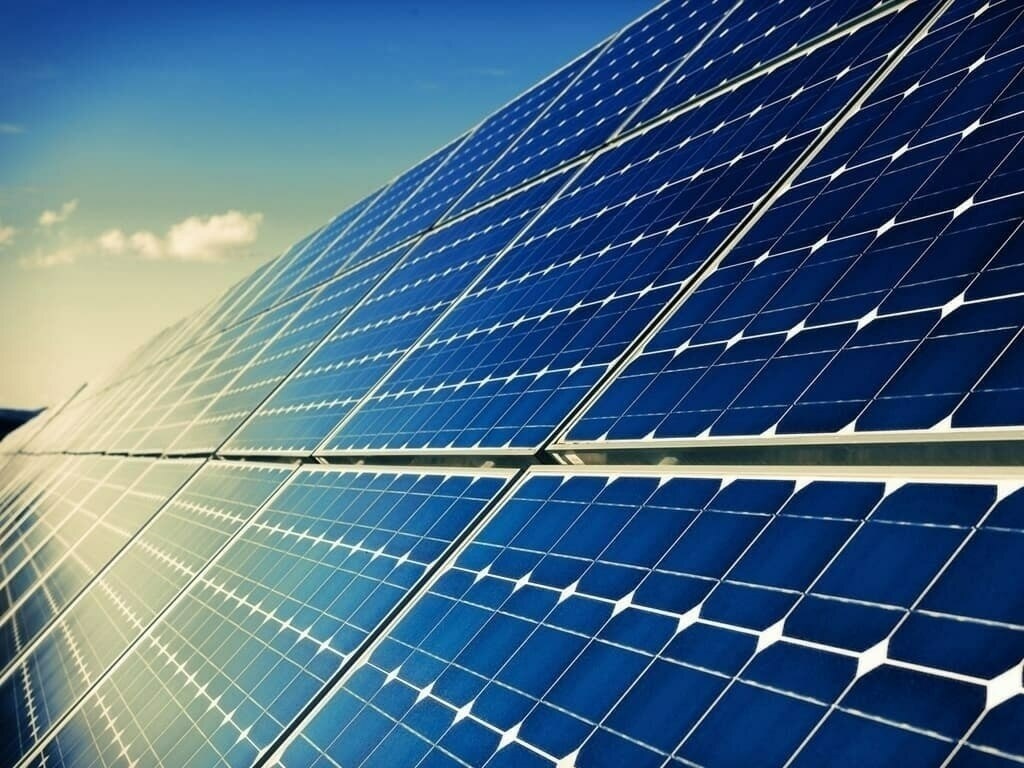
ISLAMABAD: Pakistan Solar Association (PSA) has sought intervention of the Power Division to resolve regulatory ambiguity surrounding installation of solar photovoltaic (PV) panels beyond the Distributed Generation (DG) capacity approved by the National Electric Power Regulatory Authority (NEPRA), arguing that additional panels should be permitted for self-consumption provided electricity exports remain within the sanctioned limit.
In a letter addressed to Managing Director PPMC, Abid Lodhi, PSA has requested clarification on the relationship between installed solar PV capacity at consumer premises and the DG capacity approved by NEPRA under the Distributed Generation and Net-Metering Regulations, 2015.
The association maintains that consumers holding valid DG licences should be allowed to install larger solar PV systems than their sanctioned load or approved DG capacity, provided export to the distribution company’s network remains technically restricted to the capacity authorised under the licence.
The request is aimed at enabling consumers to maximise utilisation of solar generation for their own consumption, particularly during peak sunlight hours, without exceeding the permissible grid-export limit.
PSA has also requested the PPMC to arrange a stakeholder meeting to resolve the issue, alleging that distribution companies (DISCOs) continue to impose restrictions and complications on prosumers despite regulatory precedents supporting additional PV installations for self-consumption.
According to the association, the installed capacity of solar panels behind a consumer’s meter does not necessarily translate into additional electricity exports to the grid, provided suitable export-limitation arrangements are installed.
The association has referred to a January 23, 2026 communication issued by Power Planning and Monitoring Company (PPMC), which proposed a simplified mechanism for restricting export credits where electricity export exceeds the approved DG capacity.
Under the methodology proposed by PPMC, if Export Maximum Demand Indicator (MDI) exceeds the DG capacity for a particular month, credited export units would be proportionately adjusted.
The formula provides:
Revised Export Units = Actual Export Units × (DG Capacity / Export MDI)
However, where Export MDI remains within the approved DG capacity, the actual export units would be credited without adjustment.
PPMC’s Chief Financial Officer Naveed Qaiser, in his communication to the Power Division, stated that the proposed methodology would ensure consistency and transparency while addressing excess credit beyond the allowable limit.
The company also recommended seeking advice from NEPRA to avoid regulatory objections.
PSA has argued that this methodology provides an appropriate mechanism for enforcing export restrictions without unnecessarily limiting the physical installation of solar panels.
The association has also referred to a NEPRA clarification issued on October 21, 2025, in response to a request by Dawood Export Private Limited.
According to PSA, the regulator’s clarification explicitly allows prosumers to install and expand solar PV capacity beyond the approved DG licence, provided Export MDI remains compliant with the authorised capacity.
The association maintains that this regulatory precedent supports installation of additional solar panels for self-consumption and captive use.
However, PSA alleges that DISCOs continue to disregard these precedents, resulting in unnecessary complications for consumers seeking net-billing arrangements.
The association has requested the Power Division to clarify that installed solar PV capacity may exceed the DG licence capacity, provided electricity injected into the distribution network remains within the approved export limit.
PSA has requested the Power Division to issue clear directions to DISCOs on three principal issues.
First, prosumers should be permitted to install solar PV systems with nameplate capacity exceeding their sanctioned load, provided grid exports remain technically restricted to the DG licence capacity.
Second, DISCOs should accept and process net-billing applications without rejecting them merely because installed PV panel capacity exceeds the approved DG capacity.
Third, compliance with export limits should be determined through Export MDI recorded by net-billing Advanced Metering Infrastructure (AMI) meters.
The association argues that where Export MDI exceeds the approved DG capacity, billing adjustments should be applied through the proportional correction mechanism proposed by PPMC.
According to PSA, this approach would provide a uniform and transparent compliance framework for consumers with solar PV systems of different sizes and efficiencies.
The association has also highlighted the implications of the regulatory uncertainty for consumers intending to install Battery Energy Storage Systems (BESS).
According to PSA, consumers installing batteries would require proportionately larger solar PV capacity to charge storage systems using surplus solar generation.
The association argues that restricting additional solar panel installations could undermine the economics of battery storage and force consumers to rely on electricity drawn from the grid to charge batteries.
It maintains that the primary purpose of battery storage is to retain surplus solar generation for on-site consumption and improve energy resilience.
PSA has therefore requested regulatory clarity to facilitate optimal solar system design, including integration of battery storage, while ensuring compliance with grid safety and operational requirements.
The association has further alleged that the absence of a clear regulatory mechanism has resulted in repeated demands for clarification, unnecessary site visits and, in some cases, solicitation of informal payments.
According to PSA, some prosumers have also faced threats of disconnection despite their Export MDI remaining within the DG licence capacity approved by NEPRA.
The association believes that a uniform clarification from the Power Division would eliminate existing uncertainty and reduce disputes between consumers and DISCOs.
It has urged the ministry to intervene and convene a meeting with relevant stakeholders to establish a clear regulatory position.
The letter has also been circulated to Managing Director PPMC Abid Lodhi, Energy Advisor Power Division Syed Faizan Ali Shah and the Registrar NEPRA.
The request comes amid growing interest in distributed solar generation and battery storage in Pakistan, with consumers increasingly seeking to optimise electricity consumption through rooftop solar installations.
PSA maintains that allowing additional solar panel capacity for self-consumption would improve utilisation of renewable energy resources without necessarily increasing electricity exports to the distribution network.
The association has argued that export restrictions can be enforced through technical controls and AMI-meter-based monitoring rather than imposing blanket restrictions on installed PV capacity.
The proposed arrangement, according to PSA, would also encourage investment in distributed renewable energy while maintaining compliance with the existing DG licensing framework.
The association has asked the PPMC to provide formal guidance on the matter and schedule a stakeholder meeting to resolve differences between the solar industry and distribution companies.

ISMO disagrees to include 500MW Trident hybrid project in IGCEP
ISLAMABAD: The Independent System Market Operator (ISMO) has reportedly opposed to include a 500-megawatt Trident Hybrid Wind and Solar PV...
Read more