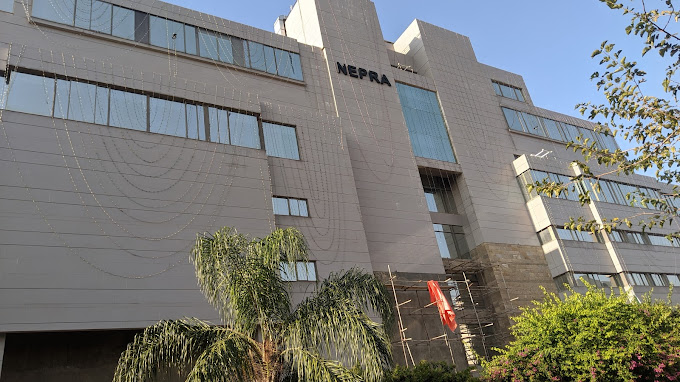
ISLAMABAD: The National Electric Power Regulatory Authority (NEPRA) has provisionally notified revised incremental electricity consumption rate for industrial and agricultural consumers from Rs22.98 to Rs25.30 per unit with effect from the November 2026 billing month, despite acknowledging that the actual marginal cost of serving incremental consumption has not yet been conclusively established.
The regulator issued the notification after receiving a response from the Power Division to objections and concerns raised by two members of the Authority. In its response, the Power Division also requested NEPRA to notify the revised Incremental Consumption Package (ICP) rate, giving an assurance that the required data for the next review would be provided during the current month.
The Power Division also rejected some of the observations and allegations made by the Authority, maintaining that it had provided data in accordance with NEPRA’s directions. It argued that it was not its responsibility to review its own data to arrive at a final figure, as the exercise was to be undertaken by NEPRA’s technical team.
The decision, notified through an SRO dated November 12, 2026, has exposed serious differences within the regulator, with two members opposing continuation of the ICP at the revised rate and recommending its temporary suspension until the Ministry of Energy (Power Division) provides a comprehensive and verifiable cost assessment.
NEPRA Chairman Waseem Mukhtar exercised his casting vote in favour of continuing the package at the provisional rate of Rs25.30 per unit, breaking the deadlock within the Authority.
The dissenting members, Amina Ahmed (Member Tariff and Finance) and Engineer Maqsood Anwar Khan (Member Development), argued that the revised rate lacked a credible linkage with the actual marginal cost of electricity supplied to incremental consumers and that continuation of the package could impose an additional financial burden on consumers who were not benefiting from the scheme.
Under the decision, the revised rate will apply to eligible incremental consumption of industrial and private agricultural consumers of XWDISCOs and K-Electric from the November 2026 billing month and subsequent months until a further determination is made following completion of a comprehensive review.
NEPRA clarified that Rs25.30 per unit is an interim and provisional rate and should not be treated as a final determination of the historical marginal cost of incremental consumption.
The Authority also directed that bills already issued for November 2026 before notification of the decision should be adjusted in subsequent billing months in accordance with applicable statutory requirements.
The package was approved by NEPRA on December 9, 2025, following a motion submitted by the Power Division on November 6, 2025. It allowed eligible industrial and private agricultural consumers to purchase incremental electricity consumption over their reference consumption at Rs22.98 per unit.
The package was designed to encourage additional electricity consumption, bring industrial demand back to the national grid and improve utilisation of available generation capacity.
Under the original decision, the Ministry was required to undertake semi-annual reviews to ensure continued cost-revenue alignment and propose adjustments in the incremental rate where necessary.
However, NEPRA stated that it had requested the Power Division on June 16, 2026, to submit its first comprehensive review after completion of the initial six-month period.
The Ministry submitted data on July 29, 2026, but NEPRA maintained that the submission did not contain the required marginal cost assessment, detailed workings or other essential information.
Consequently, NEPRA returned the submission on September 2, 2026, and directed the Ministry to provide a comprehensive review after addressing stakeholders’ concerns and consulting relevant entities.
The Power Division subsequently requested, on September 9, 2026, that NEPRA itself undertake the review and hold a public hearing.
The Authority held a public hearing on October 5, 2026, and sought further information and recommendations from the Ministry.
A meeting involving the Power Planning and Monitoring Company (PPMC) and Independent System and Market Operator (ISMO) was also held on October 19, 2026, to examine the methodology and data required for determining the actual marginal cost of incremental consumption.
According to the determination, PPMC, representing the Power Division, proposed an interim incremental rate of Rs25.30 per unit based on updated fuel price assumptions while retaining the generation mix originally assumed during the design of the package.
The proposed generation mix included 50 percent spot RLNG cargoes and 50 percent contracted Qatar RLNG for the forward period.
However, NEPRA observed that the generation mix originally used in designing the package could not automatically be considered representative of the actual marginal generation mix under changed fuel availability, market conditions and system operating circumstances.
The Authority maintained that the review should establish the actual cost attributable to incremental consumption by comparing system operations with and without the additional demand under the package.
NEPRA’s assessment based on information provided by ISMO indicated that the notional marginal price at the consumer end could have reached Rs29.65 per unit during the review period.
The assessment covered approximately 3,969 gigawatt-hours of incremental consumption, with estimated marginal costs of Rs117.659 billion.
The monthly consumer-end marginal price estimates showed substantial variations, including Rs29.96 per unit in January 2026, Rs42.01 in April and Rs49.65 in May.
However, NEPRA cautioned that these estimates were not a final determination of the actual marginal cost because of discrepancies between hourly generation data and the corresponding monthly Fuel Cost Adjustment (FCA) calculations.
The Authority also identified the need for further PLEXOS modelling to determine the actual generation requirements and fuel costs attributable specifically to incremental consumption.
The exercise requires modelling of the power system with and without ICP demand while incorporating actual generation dispatch, fuel availability, operational constraints and applicable fuel prices.
NEPRA observed that the existing information was insufficient to conclusively establish the actual marginal cost throughout the review period.
Nevertheless, it considered that continuing the existing Rs22.98 rate indefinitely without an interim adjustment could expose non-beneficiary consumers to an increasing cost differential, particularly in view of increased reliance on higher-priced spot RLNG alongside contracted Qatar supplies.
In their dissenting note, Amina Ahmed and Engineer Maqsood Anwar Khan strongly disagreed with the decision to continue the package at Rs25.30 per unit.
They maintained that the fundamental objective of the ICP was to encourage industrial and agricultural consumers to increase electricity consumption from the national grid while ensuring that the cost of incremental consumption was not transferred to other consumers.
The members argued that the original rate of Rs22.98 per unit had been calculated on the basis of expected incremental consumption and an appropriate contingency margin to ensure cost-reflectivity.
They pointed out that the Power Division was required to submit its first review immediately after May 31, 2026, but had not provided the necessary marginal cost assessment despite repeated directions from NEPRA.
According to their dissenting note, NEPRA’s tariff team initially calculated a marginal cost of approximately Rs31.83 per unit using the available information.
After receiving additional operational information from ISMO, the estimated figure was reduced to Rs29.65 per unit.
However, the members argued that this figure was also not reliable because several important factors remained unadjusted.
These included generation dispatched due to transmission and operational constraints, RLNG generation under must-purchase obligations, subsequent RLNG price revisions approved by the Economic Coordination Committee (ECC), and the need for PLEXOS modelling with and without ICP demand.
They also highlighted discrepancies between hourly operational and fuel-cost information provided by ISMO and monthly fuel-cost data reflected in FCA determinations.
The dissenting members argued that Rs29.65 per unit was not an accurate reflection of the actual historical marginal cost and that charging this rate could undermine the incentive objective of the package because it was higher than the off-peak rate under the normal tariff structure.
They further questioned the proposed Rs25.30 rate, maintaining that it was based on the original generation-mix assumptions updated with fuel prices rather than a validated assessment of the actual cost of serving incremental demand.
They recommended temporarily suspending the package until the Power Division submitted a complete review supported by verifiable data and NEPRA determined a genuinely cost-reflective rate.
The dissenting members also raised concerns about the financial implications of delayed cost-revenue adjustments for consumers not benefiting from the package.
They observed that when the cost of serving incremental consumption exceeded the applicable ICP rate, the resulting difference was being recovered through the FCA mechanism from all consumers.
Furthermore, since incremental units were excluded from quarterly tariff adjustments, their exclusion could increase the quarterly adjustment burden on consumers not availing the package.
Stakeholders had also argued that delayed completion of the first review had caused non-beneficiary consumers to bear the financial difference.
The Power Division, however, maintained that the package had helped retain industrial demand on the national grid, improve utilisation of existing power generation capacity and mitigate declining grid consumption.
It referred to an estimated annual contribution-margin impact of approximately Rs180 billion associated with declining load and electricity sales.
The Ministry also argued that industrial and agricultural consumers could provide additional and relatively stable demand, supporting grid utilisation and reducing pressure on tariffs for consumers remaining connected to the system.
NEPRA observed that captive-to-grid migration appeared to have contributed to increased grid consumption during the review period. However, it stated that the source of incremental demand did not, by itself, negate the package’s objective of increasing grid sales and improving utilisation of available capacity.
NEPRA has directed the Power Division, in coordination with relevant entities, to submit a comprehensive review covering both the first review period from December 2025 to May 2026 and the second review period from June to November 2026.
The Ministry has been directed to submit available data and comprehensive analysis by November 25, 2026, covering the period from December 2025 to November 15, 2026.
The remaining information for November 16-30, 2026, must be submitted by December 3, 2026.
The review must include PLEXOS-based modelling incorporating actual generation dispatch, fuel availability, applicable fuel prices and operational constraints, together with comparisons of system operations with and without incremental consumption.
NEPRA has also required reconciliation with relevant FCA workings, consideration of operational tags under the Market Commercial Code and plant-wise operational data for K-Electric, where applicable.
The Ministry must separately provide its recommendations on the appropriate incremental rate for each review period and whether the package should continue, be revised, modified, suspended or terminated.
The Authority clarified that both review periods would be separately assessed to determine whether an upward tariff adjustment was required in each period.
Under the original approval, the ICP is required to be terminated if an upward tariff adjustment is required in two consecutive semi-annual reviews.
In an additional note, NEPRA Member Ghulamullah Sheikh supported giving the Power Division another opportunity to provide the required information, warning that failure to meet the stipulated deadlines could result in suspension or termination of the package and initiation of legal proceedings against entities failing to comply with the Authority’s directions.
Chairman Waseem Mukhtar subsequently exercised his casting vote in favour of continuing the package at the provisional rate, making the majority opinion the final order of the Authority.

PLL, KE dispute on RLNG prices: OGRA to hold public hearing
ISLAMABAD: The Oil and Gas Regulatory Authority (OGRA) has scheduled public hearings in Karachi and Islamabad to consider Pakistan LNG...
Read more