ISLAMABAD: The government has proposed a stringent legal framework for the recovery of Petroleum Levy and Climate Support Levy from oil marketing companies, refineries and other relevant licensees, including advance payment requirements, late-payment surcharges of at least 12 per cent per annum, possible suspension of licences and imprisonment of up to three years or non-payment.
The proposed measures are contained in the Petroleum Products (Petroleum Levy and Climate Support Levy) (Amendment) Bill, 2026, which is to be introduced in the National Assembly to amend the Petroleum Products (Petroleum Levy and Climate Support Levy) Ordinance, 1961.
According to the bill, payment of the two levies would be treated as a licensing condition for every company, refinery and licensee from the date of issuance of its licence by the Oil and Gas Regulatory Authority (OGRA). The Federal Government would continue to determine the applicable levy rates through notifications published in the official Gazette.
The proposed legislation seeks to strengthen the legal framework governing the timely payment, collection, recovery and reporting of the levies and align the existing ordinance with OGRA’s licensing regime.
Under the proposed amendments, refineries would be required to deposit Petroleum Levy and Climate Support Levy in advance, before petroleum products are released from refinery gates. The reporting requirements would be prescribed through rules.
In the case of imported petroleum products, the levies would be collected in the same manner as import duty under the Customs Act, 1969.
The bill also proposes a late-payment surcharge where a company, refinery or licensee fails to pay the levies within the prescribed requirements. The surcharge would be calculated by the relevant tax or customs authority at an annual rate equivalent to 1.5 times the prevailing six-month Karachi Interbank Offered Rate (KIBOR), subject to a minimum of 12 per cent per annum, whichever is higher.
The surcharge would accrue daily from the date of default until actual payment, without prejudice to other legal remedies or recovery proceedings.
To strengthen enforcement, the proposed legislation provides that recovery provisions under the Customs Act, 1969, or the Sales Tax Act, 1990, as applicable, would be used to recover unpaid levies and related surcharges.
The relevant tax or customs authority would also be empowered to initiate recovery of the outstanding levy and late-payment surcharge simultaneously.
The authorities would be required to arrange digital sharing of data relating to the levies and surcharges with the Petroleum Division in a mutually agreed format.
The bill further proposes that OGRA may suspend or revoke the licence of a company, refinery or licensee where Petroleum Levy, Climate Support Levy or the associated late-payment surcharge remains unpaid. Such action would be taken in accordance with the Oil and Gas Regulatory Authority Ordinance, 2002, and the rules and regulations framed under it.
The proposed amendments also introduce criminal liability for failure to make complete payment of the levies and applicable late-payment surcharges. A person found guilty would face imprisonment for a term of up to three years, a fine of up to the amount of the levy or late-payment surcharge involved, or both.
Where the offence is committed by a company, corporation, partnership or firm, every director or partner could also be held liable unless the individual establishes that the offence was committed without his or her knowledge or consent.
No court would take cognisance of an offence under the proposed provision except on a written complaint filed by an officer of the Federal Board of Revenue (FBR) authorised for this purpose.
The legislation also seeks to make reporting and independent verification of levy payments mandatory for companies, refineries and licensees covered by the ordinance.
Under the proposed new section 4A, every company, refinery or licensee would be required to submit a monthly statement to the relevant division of the government regarding payment of Petroleum Levy and Climate Support Levy on petroleum product sales. The manner of submission would be prescribed through rules.
In addition, each covered entity would have to furnish an annual audited certificate during the first quarter of the following financial year. The certificate, issued by an authorised audit firm, would certify the accuracy of the levies accrued and paid under the ordinance.
The cost of the audit would be borne entirely by the relevant company, refinery or licensee. For this purpose, an authorised audit firm would mean a firm registered with the Audit Oversight Board under the Securities and Exchange Commission of Pakistan Act, 1997.
The bill also proposes changes to the definitions of a company, oil marketing company and refinery to clarify the entities covered by the law. The definition of a company would include an oil marketing company, refinery and a person engaged in manufacturing, refining or reclaiming lubricating oil from used lubricating oil under a licence granted by OGRA.
An oil marketing company would be defined, excluding lubricant marketing companies, as an entity engaged in purchasing or obtaining petroleum products from refineries, blending plants or foreign sources for sale, distribution or marketing, directly or through agents or dealers, at dispensing outlets or filling stations under an OGRA licence.
The definition of a refinery would cover a facility or industrial plant where crude oil is refined to produce petroleum products under an OGRA licence.
The proposed amendments would also omit sub-section (3) of section 3 and remove the Second and Fourth Schedules of the existing ordinance.
Transitional provisions have been included to address outstanding liabilities and proceedings. The bill states that the amendment would not affect the accrual of Petroleum Levy, Climate Support Levy or late-payment surcharge under the Public Finance Management Act, 2019, or consequential legal proceedings for collection and recovery relating to the period before the new law comes into force.
It further provides that, after promulgation of the amendment, amounts of the two levies and related surcharges due under sections 40B and 40D of the Public Finance Management Act, 2019, would be recoverable under the amended ordinance.
The statement of objects and reasons accompanying the bill says the proposed changes are intended to ensure timely payment, collection, recovery and reporting of the levies and bring the legal framework into line with OGRA’s licensing regime.
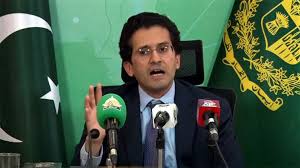
The bill has been signed by Minister for Petroleum Division Ali Pervaiz Malik and is intended for introduction in the National Assembly. The proposed measures would take effect upon enactment, as stipulated in the bill.
CPPA-G faces NEPRA’s grilling over solarization of rented office amid grid defection concerns
ISLAMABAD: The Central Power Purchasing Agency-Guaranteed (CPPA-G), which has repeatedly expressed concern over declining electricity demand due to rapid solarisation...
Read more