ISLAMABAD: The Central Power Purchasing Agency-Guaranteed (CPPA-G), which has repeatedly expressed concern over declining electricity demand due to rapid solarisation across the country, came under scrutiny at a public hearing on Tuesday for planning to install solar panels at its own rented offices to reduce electricity costs.
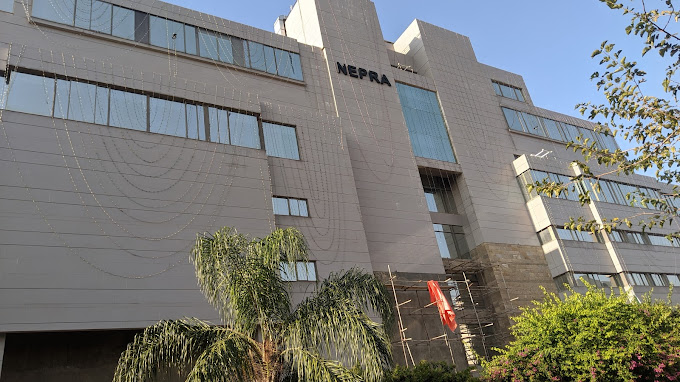
The proposed solar project triggered pointed questions from members of the National Electric Power Regulatory Authority (NEPRA), who questioned the apparent contradiction between CPPA-G’s concerns about consumers shifting away from the national grid and its own plan to reduce dependence on grid electricity.
“Is this grid defection? When our own people will do this, then what can be said about others?” Member (Tariff and Finance) Amina Ahmed asked during the hearing.
CPPA-G Chief Executive Officer Rehan Akhtar acknowledged that the proposed solarisation could be considered grid defection but maintained that the agency was concerned about the broader implications of consumers moving away from the national grid.
The exchange exposed a dilemma facing the power sector, as consumers increasingly turn to solar energy to manage high electricity bills while power sector entities warn that declining grid consumption is putting pressure on the existing electricity tariff structure.
Member (Sindh) Ghulamullah Shaikh questioned whether the building where CPPA-G intended to install solar panels was owned by the agency or rented.
Akhtar explained that the premises were rented and said this had been the principal reason for the prolonged delay in implementing the solar project.
He further stated that the Capital Development Authority (CDA) had not allotted a plot to CPPA-G for construction of its own building. Even if a plot were allotted, construction would take around five years, whereas the estimated payback period for the solar project was two years.
The explanation, however, did not remove the underlying question of why an agency concerned about grid defection was itself considering solarisation to reduce its electricity expenditure.
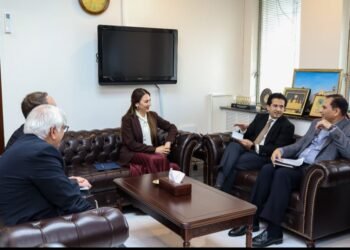
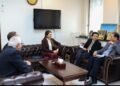
The hearing was presided over by NEPRA Chairman Waseem Mukhtar, with Member (Tariff and Finance) Amina Ahmed, Member (Development) Maqsood Anwar Khan and Member (Sindh) Ghulamullah Shaikh in attendance.
CPPA-G’s solarisation plan came under discussion during proceedings on its petition seeking an increase in the Special Purpose Agent (SPA) fee to Rs14.47 per kW per month for FY2026-27 from Rs10.52 per kW per month, an increase of approximately 37.5 per cent.
Interveners questioned the proposed increase, arguing that electricity consumers were already paying high tariffs and should not be burdened with rising administrative costs and overlapping charges of power sector entities.
The debate over solarisation is particularly significant because CPPA-G has been highlighting the impact of growing solar installations on grid demand. As households and businesses increasingly generate their own electricity, the volume of power purchased from the national grid can decline, potentially shifting a greater share of fixed system costs onto remaining grid consumers.
However, CPPA-G’s own proposal to install solar panels at its rented premises raises questions about whether the financial considerations driving consumers towards solar energy also apply to public sector entities.
Akhtar’s explanation that the project could recover its cost within two years suggests that the agency expects solarisation to deliver substantial savings over a relatively short period. The agency, however, did not provide a detailed breakdown of the proposed project’s capacity, capital cost or projected annual savings in the discussion cited at the hearing.
The issue also raises questions about the consistency of the government’s broader approach to distributed solar generation. While consumers seek alternatives to expensive grid electricity, power sector organisations are under pressure to maintain the financial sustainability of the national grid and recover the costs of generation, transmission and distribution.
The challenge for policymakers is to reconcile these competing considerations without discouraging cost-saving investments or allowing the financial burden of the power system to fall disproportionately on consumers who remain dependent on grid electricity.
The hearing also examined CPPA-G’s proposed operating costs, recruitment expenditure and the possibility of overlapping functions with the Independent System and Market Operator (ISMO) and the Power Planning and Monitoring Company (PPMC).
Amir Sheikh from Lahore stated that CPPA-G has asked for Rs 873 million to be passed on to consumers to pay its turnover tax liability. Basically turnover tax means that 1.25% of a company’s total revenue is its minimum tax liability. For example if revenue is Rs 100m, then the turnover tax will be Rs1250000. This is not fair to consumers as consumers have to pay this 1.25% on the revenue of all the companies in the power hierarchy.
The turnover tax will also have a compounding effect because it will become part of the revenue NEPRA approves for CPPA-G and subsequently be added to the DISCOs’ revenue requirement. DISCOs’ revenue will therefore include the Rs 873 million and DISCOs will then be charged turnover tax again on the Rs873 million at 1.25% because they must pay 1.25% on their total revenue.
He said Nepra, DISCOS, CPPA-G , ISMO, PPMC, PPIB, PITC, NGC and WAPDA etc tax liability to be passed on to consumers?
Rehan Javed, in his post hearing comments has stated that the Authority should reject any increase over the FY2025-26 determination (Rs 10.52 per kW per month; net revenue Rs 3.347 billion and direct CPPA-G to control its expenses and bring down its revenue requirement, setting FY2026-27 costs from audited actuals, not asks, and rejecting the Rs 159m.
He has also demanaded that audited accounts be placed on record and allow time for comment. In addition, NEPRA should examine and decline pass-through of tax that cascades through entities, as objected by Mr Aamir Sheikh.
The proposed increase in the SPA fee will be considered by NEPRA as part of its regulatory assessment of CPPA-G’s revenue requirement for FY2026-27.