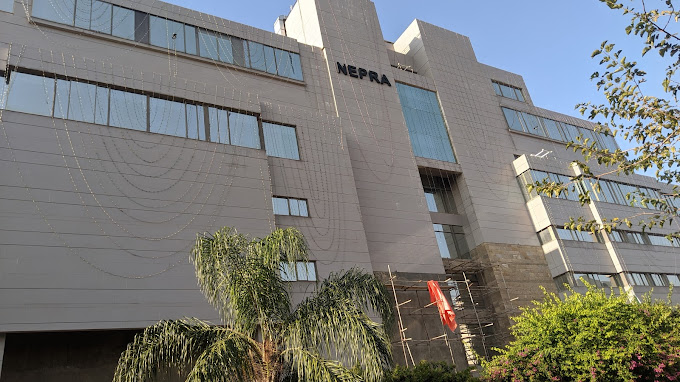
ISLAMABAD: The National Electric Power Regulatory Authority (NEPRA) has proposed a new regulatory framework for introducing standalone electric power systems in selected areas of the country, allowing the federal or provincial governments to establish electricity supply arrangements independent of the national or provincial grid in areas where conventional distribution networks suffer from persistently high losses, poor recoveries, inadequate service quality or are economically unviable.
Under the draft National Electric Power Regulatory Authority Standalone Electric Power System (Pilot Projects) Regulations, 2026, the proposed initiative would initially be limited to two pilot projects per distribution licensee, although NEPRA could permit a higher number at the request of the sponsoring government.
The draft regulations have been issued for public consultation under Section 47(3) of the Regulation of Generation, Transmission and Distribution of Electric Power Act, 1997. Interested parties have been invited to submit their comments to the NEPRA Registrar within 30 days of publication.
According to the draft, a standalone electric power system would comprise self-contained generation facilities, with or without energy storage, and associated electrical infrastructure to supply electricity to individual premises without any direct or indirect electrical connection to the national or provincial grid.
The proposed framework envisages government-sponsored schemes in areas where maintaining conventional distribution infrastructure has become financially or operationally difficult. Such arrangements could provide an alternative to extending or maintaining grid-based electricity networks in remote locations and areas characterised by high distribution losses, poor bill recovery and unsatisfactory service delivery.
Under the proposed regulations, the federal government or a provincial government would act as the sponsoring government and prepare a scheme for establishing a standalone electric power system.
The scheme could be notified with the consent of the relevant host distribution licensee operating in the area. Upon notification, the geographical territory specified in the scheme would automatically be excluded from the respective licences of the host distribution company and the host supplier of last resort.
The draft defines the host distribution licensee as the entity licensed by NEPRA to conduct distribution business in the area concerned. The host supplier of last resort would be the licensed entity responsible for electricity supply within its designated service territory.
The proposed arrangement would therefore require changes to the existing licensed service territories to accommodate the standalone electricity system.
However, the draft specifically provides that a host distribution licensee could de-energise an eligible consumer’s connection only after installation of the standalone electric power system.
This provision seeks to establish a sequence under which the alternative electricity arrangement must be installed before the existing connection is disconnected.
The draft regulations specify that pilot projects could only be initiated in areas exhibiting persistently high distribution losses, high recovery losses, poor service quality, remoteness or circumstances in which the cost of maintaining a conventional electricity network is not economically justified.
The sponsoring government would initially be allowed to undertake a maximum of two pilot projects for each licensee. NEPRA could approve a larger number if the sponsoring government made a request.
The draft does not prescribe a uniform technology for these systems. Instead, the sponsoring government would be required to provide technological details and an implementation plan for each scheme.
The framework could therefore accommodate different technical arrangements, provided they meet the applicable regulatory, engineering and safety requirements.
The proposed regulations require every notified scheme to contain comprehensive information about its objectives, geographical coverage, implementation arrangements and expected public benefits.
The scheme would have to identify the specific geographical area, feeders and premises covered, along with a statement demonstrating compliance with the eligibility criteria for pilot projects.
It would also specify the technology to be deployed, implementation timelines, the implementing agency and any cost-sharing mechanism.
The sponsoring government would be required to explain the expected public benefit and address the safety aspects of the proposed electricity system.
The draft further requires evidence of consultation and notice to affected eligible consumers, as well as arrangements for dealing with future eligible consumers in the designated geographical area.
The ownership, operation and maintenance responsibilities for the standalone systems would also have to be specified.
In addition, the scheme would need to establish minimum service levels for consumers, including available capacity, energy availability, timelines for fault rectification and replacement of components, and a complaint-handling mechanism, where applicable.
Engineering, procurement and construction arrangements would have to be detailed, together with a cost-benefit analysis and a mechanism for recovering any cost-sharing contributions associated with implementation.
The regulations also require a plan for situations in which a standalone scheme is subsequently discontinued and the affected area needs to be reconnected to the conventional distribution network.
A key feature of the proposed framework is that the sponsoring government would finance the standalone electric power system, either entirely or partly where a cost-sharing arrangement is adopted.
According to the draft, the funding could come through government grants, subsidies or any other financial resource.
The regulations explicitly state that the cost of such a scheme would not, under any circumstances, form part of a licensee’s revenue requirement for tariff determination.
The provision is intended to keep the cost of government-sponsored standalone systems separate from the regulated revenue requirements of distribution companies and electricity supply licensees.
The draft also addresses the possibility that an area may subsequently need to return to the conventional distribution network.
In such a situation, all costs associated with restoration, reinstallation, augmentation or reconnection of network facilities, including associated infrastructure and equipment, would be borne by the sponsoring government.
These costs could not be included in a licensee’s revenue requirement, treated as prudent expenditure for tariff purposes or recovered from electricity consumers through tariffs.
The draft places several obligations on existing licensees to address the implications of removing selected areas from their service territories.
The host distribution licensee would be required to ensure that the treatment of its existing distribution system and related assets in the designated area complies with the regulations and applicable documents.
This would cover decisions regarding de-energisation, retention, redeployment, retirement or disposal of assets, as well as the treatment of the regulated asset base, depreciation and investments already made or included in the approved investment programme.
The regulations also require the mechanism for recovering outstanding arrears to be devised in accordance with applicable regulatory documents.
Before consenting to a standalone scheme, the host distribution licensee would have to assess its implications for the licensed distribution and electricity supply businesses.
The assessment would specifically include any potential implications for future or pending privatisation transactions.
This requirement could become particularly relevant where a proposed standalone scheme covers an area served by a distribution company undergoing restructuring or a privatisation process.
The draft further requires every licensee to submit a proposed modification of its licence within 30 days of the regulations coming into force to bring its licence into alignment with the new framework.
To ensure that decisions on the future regulatory framework are based on evidence, the draft proposes a reporting and assessment mechanism for the pilot projects.
The implementing agency would be required to submit a report to NEPRA three months after implementation of a scheme.
The report would cover progress against the implementation plan, consumer behaviour and response, consumer satisfaction, administrative feasibility and the reliability of the standalone electricity system.
NEPRA would conduct a further assessment after one year of implementation.
These reviews would provide the regulator with information on the operational performance of the schemes and their suitability for continuation or possible expansion.
The draft, however, does not specify predetermined numerical targets for distribution losses, recovery improvements, reliability or consumer satisfaction. Instead, it requires reporting on these areas to support subsequent regulatory assessment.
The proposed regulations require the implementing agency to ensure that standalone electricity systems are designed, installed, operated and maintained in accordance with applicable technical specifications and standards.
Their installation, inspection and operation would also have to comply with applicable safety requirements and existing laws, including electrical inspection requirements imposed by the relevant provincial government.
The draft further provides that the implementing agency would not be allowed to recover any charges from consumers other than those specified in the notified scheme.
Both the implementing agency and the relevant licensee would be required to protect consumers’ personal data collected for the pilot project.
These provisions establish a framework for technical compliance, transparency regarding consumer charges and protection of information gathered during implementation.
The draft regulations have been issued to elicit public opinion before finalisation. Comments may be submitted to the Registrar, NEPRA, within 30 days of publication.
The proposed regulations would come into force immediately upon their formal adoption and notification. Until then, the document remains a draft for consultation rather than an operative regulatory framework.
The proposed initiative would allow the government to test standalone electricity systems in areas where conventional grid-based distribution faces persistent financial or operational challenges, while requiring government financing, defined service standards, consultation with affected consumers and subsequent performance reviews.
The extent to which the model could be expanded beyond the initial pilot projects would depend on implementation experience and NEPRA’s assessment of their reliability, administrative feasibility and consumer response. Ends
WAPDA inks Rs 133 bn pact for Diamer Basha Dam HM-1 contract
LAHORE : WAPDA has signed the agreement for HM-1 Contract of Diamer Basha Dam Project at a ceremony held at...
Read more