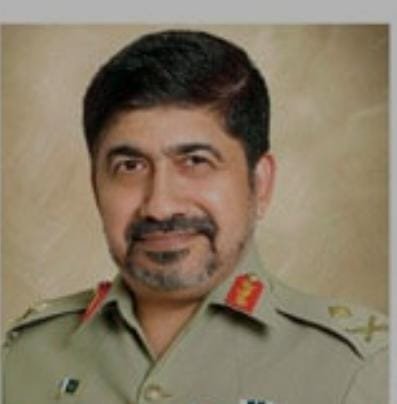
ISLAMABAD: The Prime Minister has appointed Lieutenant General (Retd) Muhammad Zafar Iqbal as Special Assistant to the Prime Minister (SAPM) on Energy, with the status of Minister of State, with immediate effect.
According to a notification issued by the Prime Minister’s Office on October 13, 2026, the appointment has been made under Rule 4(6) of the Rules of Business, 1973.
The notification, bearing No. 3882/APM/2026, states that the Cabinet Division will take further necessary action in connection with the appointment.
The notification was issued by Shakeel Ahmed Mangnejo, Special Secretary to the Prime Minister.
With this appointment, Lt Gen (Retd) Muhammad Zafar Iqbal will serve as the Prime Minister’s special assistant on energy affairs, with the status of a Minister of State.The National Task Force on Energy, headed by Lt General Zafar Iqbal, renegotiated agreements with Independent Power Producers (IPPs) and Government Power Plants (GPPs), has already been conferred with performance-based rewards by the Government along with other members of the team.
The Task Force had claimed that the government raised Rs 1.225 trillion from banks to reduce circular debt, which will be recovered from consumers of distribution companies (Discos) and K-Electric at Rs 3.23 per kWh over a period of six years.
The Task Force was of view it has achieved significant milestones in advancing power sector reforms which termination of contracts with six IPPs, successful renegotiation of tariffs with thermal, bagasse and wind IPPs, yielding estimated savings of Rs 4,000 billion over the remaining life of the projects, settlement of arbitration awards between the Government of Pakistan and 12 thermal IPPs, including recovery of past excess payments amounting to over Rs 30 billion, resetting future Late Payment Interest (LPI) to KIBOR plus one percent across the entire power and petroleum supply chain; waiver of late payment interest exceeding Rs 400 billion; and facilitation and implementation of the Rs 1.225 trillion circular debt financing scheme through cost-effective commercial bank financing.
The Task Force further claimed that these initiatives have resulted in substantial financial savings for electricity consumers and contributed to the long-term sustainability of the power sector.