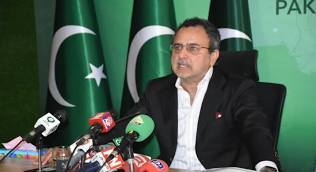
ISLAMABAD : Federal Minister for Power Division Awais Ahmad Khan Leghari has announced lifting of scheduled electricity load management as the country has received liquefied natural gas (LNG) supplies purchase on spot to deal with the shortfall.
In a video massage on Friday , the Minister said the country had received LNG shipments a day earlier, enabling authorities to restore normal electricity supply. He noted that intermittent load shedding experienced in recent weeks was primarily due to a shortage of gas, not because of any system failure or lack of generation capacity.
Leghari recalled that around 13 to 14 days ago, consumers faced up to five hours of load shedding on April 13 and 14. However, he said there was no load management between April 17 and 19, while from April 19 to 29, outages were reduced to between two and two-and-a-half hours.
He added that the government had already clarified its position during a press conference held about two weeks ago, emphasizing that the power shortfall was linked to fuel constraints.
According to the minister, disruptions in gas supply—partly due to international factors, including tensions linked to the Iran–U.S. situation—had affected electricity generation.
The minister said that generating electricity through diesel or furnace oil to completely eliminate load shedding would have significantly increased costs, placing an additional burden on consumers.
“We had to strike a balance between supply and affordability,” he added.
Leghari also highlighted improvements in hydropower generation, stating that output had risen to around 6,000 megawatts, compared to nearly 1,000 megawatts earlier. He added that water releases from dams are managed by the Indus River System Authority based on provincial requirements.
He refused the claims that Pakistan’s electricity generation capacity stands at 46,000 megawatts, clarifying that actual available capacity is around 32,000 megawatts and varies throughout the year.
The minister credited the government’s timely measures for stabilizing the situation and expressed hope that load shedding would not return. “We had to temporarily run furnace oil-based plants and procure expensive gas, as LNG from Qatar was not available,” he said.
Leghari concluded by expressing confidence that, barring unforeseen technical faults in transmission lines, consumers would not face further power outages.
He also reaffirmed the government’s commitment to protecting users from high electricity costs while ensuring uninterrupted supply.
However, according to existing policy, there will be no relief in electricity outages in those areas of the country where losses are over and above the set benchmarks and consumers are habitual in not paying their bills or involved in electricity theft through different ways including hooks ( Kundas).
Though National Electric Power Regulatory Authority (NEPRA) has termed revenue based load shedding as illegal but Power Division claims that if uninterrupted power supply is ensured in high loss making areas, it will add upto Rs 500 billion in circular debt per annum which is currently over Rs 1.8 trillion