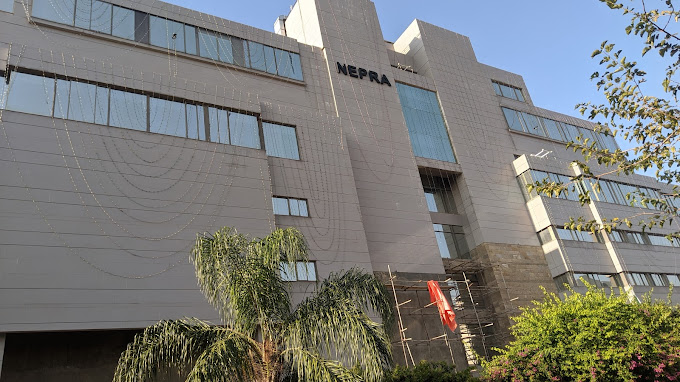
ISLAMABAD: While setting aside the proposals submitted by industry, the National Electric Power Regulatory Authority (NEPRA) has formally approved the government’s proposed three-year concessional tariff of Rs 22.98/kWh on an incremental basis for the industrial and agriculture sectors.
The reference period for calculation shall be from December 2023 to November 2024. This package shall be applicable only to the industrial and private agricultural tariff categories (as per the notified Schedule of Tariff).
According to NEPRA, if the consumption record for a specific consumer is not available or shows zero reference consumption, the benchmark consumption criteria for new consumers will be applied for the respective period. In the event of any change in tariff category or a shift from non-ToU to ToU after the reference month, the consumer shall be considered a new consumer. However, a consumer changing slabs within the same category (e.g., B2 to B3) shall not be considered a new consumer, and for the purpose of benchmark consumption, the formula applicable to existing consumers with sanctioned load enhancement will apply. Consumers shifting tariff categories (e.g., Commercial to Industrial) will be considered new consumers for availing the package.
The Regulator further stated that if a consumer remained disconnected or the consumer’s meter was defective during the benchmark consumption period, then the benchmark consumption criteria for new consumers will be applied for that period.
If the consumer’s meter is defective or locked during the current billing month, the consumer shall not be eligible for the incentive. Detection units shall neither be used for benchmark consumption calculation nor for incremental units’ calculation. Dial adjustment effects (correction of readings other than detection) will be applied for calculating benchmark consumption.
All Captive Power Plants (CPPs) will be considered new consumers for benchmark consumption purposes.
If the meter of a consumer cannot record MDI, then only the sanctioned load shall be used to calculate benchmark consumption, wherever applicable. Duties and taxes shall be calculated on the consumer’s payable amount.
Net-metering consumers will be eligible for the package only if there is excess import in the current month in the respective peak and off-peak periods. The reference consumption for net-metering consumers will be based solely on imported units. Their incremental consumption will be capped based on net imported units (imports minus exports during the current month). Incremental consumption will be distributed across peak and off-peak periods on a pro-rata basis.
No Tariff Differential Subsidy (TDS) shall be claimed on incremental consumption under this scheme.
Wheeling consumers shall also be eligible for this package and will be treated as new consumers for benchmark consumption calculations.
Regarding net-metering consumers, NEPRA agreed with K-Electric’s interpretation that only the current month’s net imports shall be considered and that no carry-forward adjustments from previous months should be included.
Commenting on the determination, members of the business community said that NEPRA had made no meaningful changes to the package submitted by the Power Division. They termed the hearings and consultations an “eye wash” and a waste of time.
“Industry deplores NEPRA for acting as a rubber stamp for government decisions and suggests that public hearings should not be conducted in the future. At least the cost of such meaningless hearings can be avoided. The package is discriminatory and will result in the closure of many industries while giving undue benefit to others. Practically all textile units have been excluded from the package due to the 60% load factor requirement for captive units. Once again, the government has proven that it is clueless about what is causing industries to suffer,” said one industrialist on condition of anonymity.
The state of affairs in OGRA is same. OGRA allowed RLNG arrears from 2015 without any public hearing. Courts then ordered hearing. Shockingly, despite associations and industry pointing out many mistakes in OGRA calculations during hearing, OGRA has again announced almost same arrears thereby proving hearing was an eyewash
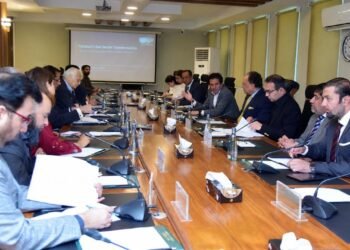
Responding to submissions made by stakeholders during the hearing, the Power Division representative explained that the industrial tariff had decreased by 29%, from Rs 62.99 to Rs 44.70, between March 2024 and October 2025. Regarding benchmark units, it was explained that preferences may vary across consumers, but a one-year benchmark was selected because industrial consumption from the grid was lowest during this period, allowing a lower benchmark for availing the incremental package. On concerns about needing additional investment to increase consumption, the Power Division said that industry had already achieved 34 billion units in 2022—over 20% higher than the benchmark period—thus no additional investment should be required. On the involvement of the IMF, the Power Division clarified that the IMF had never opposed such subsidy-neutral packages aimed at increasing electricity usage.
The Authority noted that nearly all stakeholders had raised concerns regarding the excessive load factors used for calculating reference units, which were significantly higher than actual load factors. NEPRA reviewed actual load factors of industrial consumers and concluded that the figures proposed by the Ministry of Energy (Power Division) did not reflect actual values. The MoE (PD) defended its proposal, stating that lowering load factors would reduce captive consumers’ contribution toward fixed/capacity costs and consequently result in positive quarterly adjustments for other consumers.
For non-captive industrial consumers, no valid justification was provided for disregarding actual load factors. NEPRA stated that using actual load factors would have been more appropriate to incentivize electricity usage. However, to avoid additional financial burden on other consumers, NEPRA approved the load factors as proposed by the MoE (PD).
NEPRA also noted that the MoE (PD) had proposed applying these load factors based on the higher of the MDI for the relevant month or the sanctioned load. NEPRA expressed concerns that this approach would benefit only a limited number of new consumers. After discussions, NEPRA decided to revise the formula—“higher of MDI for the relevant month or sanctioned load” shall be considered the MDI for the relevant month for new consumers and for consumers lacking benchmark consumption for any month.
Regarding concerns raised by M/s Cherat Cement on the inclusion of wheeling consumers, NEPRA stated that the package must be applied in a non-discriminatory manner. Considering that wheeling consumers also contribute to fixed system costs up to their benchmark consumption, NEPRA decided to include wheeling consumers in the package, noting that a similar approach was taken for the earlier winter incentive package.
During the hearing, the MoE (PD) clarified that if the actual marginal cost in any month exceeds the approved Rs 22.98/kWh, consumers availing the package will continue to be charged Rs 22.98/kWh. The MoE (PD) will file a separate request for revision of marginal cost, applicable once approved. Until then, the difference will be borne by all consumers. If the actual marginal cost later falls below the approved marginal cost, the benefit will likewise be passed on to other consumers.
NEPRA noted that since consumers availing the package will pay the marginal cost, ideally no loss should occur under the scheme. If any loss arises due to a shortfall between revenue and tariffs, it shall be borne only by the consumers availing the package.
For K-Electric’s query regarding annual revenue recovery, NEPRA stated that KE has been allowed a Multi-Year Tariff until FY 2030, with mechanisms similar to those allowed to DISCOs. Therefore, KE must extend the incremental package to its consumers in accordance with NEPRA’s decision.
NEPRA approved the package with the following key points:
(i) A rate of Rs 22.98/unit will apply on incremental consumption for industrial and private agricultural consumers, including both ToU and non-ToU categories of DISCOs and K-Electric, for peak and off-peak hours. The reference period shall be December 2023 to November 2024.
(ii) The package will remain effective for three years from the date of approval and will apply on a billing-month basis. It will automatically expire after three years.
(iii) The package shall be subsidy-neutral for both DISCOs and KE consumers. Positive FCAs will apply on incremental units. QTAs, DSS, and negative FCAs will not apply.
(iv) If aggregate incremental consumption in industrial and agriculture sectors exceeds 25% above baseline, an automatic review will be triggered.
(v) Semi-annual reviews will ensure cost-revenue alignment. If upward tariff adjustments are required for two consecutive reviews, the scheme will be terminated immediately.
(vi) Any unforeseen loss under the scheme, though unlikely, shall be borne only by consumers availing the package.