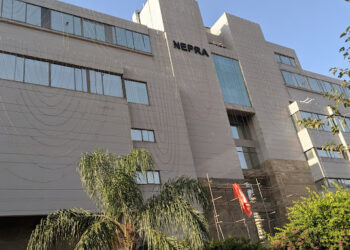
ISLAMABAD: Chairman National Electric Power Regulatory Authority (NEPRA) Waseem Mukhtar has grilled ISMO, DISCOs and CPPA-G for presenting different figures of demand projects, urging on a rational and transparent mechanism to align upcoming generation capacity with prevailing and projected demand while safeguarding consumer interests.
In his rare additional note, he has offered his comments on the Integrated System Plan (ISP) 2025- 35 approved by the Authority with a long list of concerns and suggestions.
While agreeing with the Authority’s determination in the matter of the Integrated System Plan (ISP) 2025- 35 submitted by ISMO. he has placed place on record certain additional comments of advisory nature.
According to Mr. Mukhtar, the concerns raised by various stakeholders regarding potential surplus generation capacity merit serious consideration by ISMO; however, ISMO failed to provide a satisfactory response during the proceedings. Pakistan’s power sector continues to face a structural challenge of surplus capacity, resulting in substantial capacity payments and an increasing cost burden on consumers. This is compounded by declining electricity sales and reduced utilization of generation assets, which increase capacity charges on a per-unit basis. The resulting higher cost of grid electricity further suppresses demand as consumers increasingly shift to comparatively cheaper alternative sources while retaining the grid primarily as a backup. This creates a self-reinforcing cycle of declining grid demand, underutilization of generation capacity, higher per-unit capacity costs and further migration from the grid, thereby adversely affecting affordability, efficiency and long-term sector sustainability.
He said that during a recent FCA hearing, ISMO indicated that daylight demand has declined to approximately 12,000 MW, broadly corresponding to generation from must-run plants. In view of the changing demand pattern and increasing reliance of end consumers on alternative sources, concerted measures are required to reduce the cost of grid electricity and restore its competitiveness, thereby encouraging consumers to remain connected to and optimally utilize the national grid.
Transmission constraints further aggravate the issue by restricting the evacuation of comparatively cheaper available power to load centres. Transmission projects should, therefore, be executed on priority basis to ensure the efficient evacuation of low cost generation. Such investments should, however, be appropriately aligned with prevailing and projected demand so as to avoid creating further stranded or underutilized capacity.
The ISP is intended to provide an integrated framework for generation and transmission expansion. It is, therefore, important that the ISP also assesses, to the extent reasonably practicable, the likely impact of proposed investments and capacity additions on end consumer tariffs. Incorporating such an assessment would facilitate more informed, holistic and economically sustainable planning.
” It is noted that ISMO has excluded several projects from the IGCEP that were earlier categorized as ‘committed’ under the assumptions and criteria prescribed in 2021 by CCI. Since then, the system scenario has evolved considerably, particularly with rising rooftop solar penetration and slowing demand growth, warranting a rational and transparent mechanism to align upcoming generation capacity with prevailing and projected demand while safeguarding consumer interests, ” he said adding that committed projects should remain subject to defined progress criteria and milestones, and any project failing to demonstrate satisfactory progress within the stipulated timeframe should be excluded from the committed list after due diligence and legal process rather than being retained indefinitely, particularly where continued inclusion would result in unnecessary capacity and associated costs for consumers. All generation projects be included in ISP based on merit based transparent criteria.
Chairman NEPRA is of the view that the effectiveness of the ISP also depends upon consistency among the assumptions and projections submitted by all relevant stakeholders. During the review of the ISP, Distribution Investment Plan (DIP) and Power Price Projections (PPP), significant variations were noted in the demand projections submitted by ISMO, DISCOs and CPPA-G respectively. Such divergence in a fundamental planning assumption undermines the certainty and robustness of the planning exercise. Since future generation requirements are directly dependent upon the demand outlook, reasonable alignment and reconciliation of demand projections is necessary to determine the appropriate quantum, timing and composition of required capacity. Subsequent iterations of the ISP should, therefore, clearly identify and reconcile the assumptions underlying the demand projections of all relevant stakeholders.
Generation expansion should, as a fundamental principle, be undertaken on a least-cost basis, consistent with the National Electricity Policy. Where, however, a project of strategic or national importance is pursued despite having an incremental cost over the least-cost option, the applicable framework should require the sponsoring Federal or Provincial Government to finance such incremental cost. This approach would permit strategic projects to be accommodated without undermining the least-cost principle or transferring the associated additional cost to electricity consumers.
Wrapping up his note, Chairman NEPRA stated that given the continuing affordability challenges faced by public at large, the planning framework should provide due consideration to innovative and out of the box alternative solutions capable of improving system efficiency, flexibility and resource utilization. Emerging mechanisms and technologies, including CTBCM, BESS and other innovative solutions, therefore, be evaluated as part of the planning process where they can reduce system costs, optimize existing generation and network resources, and defer or avoid unnecessary capacity additions. Future investments should accordingly be justified not merely on the basis of capacity requirements, but on their overall economic, system and consumer-cost implications. Ends