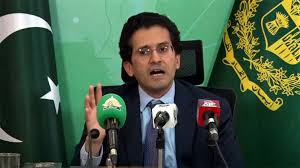
Islamabad, July 18, 2026: Federal Minister for Petroleum Ali Pervaiz Malik on Saturday chaired a high-level meeting with key stakeholders, including the Oil and Gas Regulatory Authority (OGRA), the Oil Companies Advisory Council (OCAC), the Oil Marketing Association of Pakistan (OMAP), Refineries, and Oil Marketing Companies (OMCs). Senior officials of Petroleum Division were also present.
The meeting was convened to brief industry stakeholders on the new pricing mechanism transitioning from weekly to daily basis and obtain first-hand feedback on implementation challenges and any teething issues to ensure a smooth transition. The reform marks a significant step towards deregulation of Pakistan’s petroleum sector, aimed at enhancing transparency, ensuring consumer protection, and fostering a more competitive market environment. The move was widely welcomed by the industry as a positive step forward.
The Minister informed participants that the reform has been undertaken on the directive of the Prime Minister of Pakistan and approved by the Federal Cabinet as part of the Government’s commitment to move towards rules based petroleum regime. Under the new mechanism, retail prices will be determined through a transparent, formula-based process anchored in market fundamentals, insulating consumers from price shocks influenced by political expediency.
Speaking on the occasion, Federal Minister Ali Pervaiz Malik said that the implementation of daily petroleum pricing regime represents a fundamental shift towards a market-driven competitive economy. By decoupling petroleum prices from the weekly announcement cycle and mandatory government approval, we are reducing the potential for market abuse and windfall gains.
The meeting was informed that the daily pricing mechanism will provide greater transparency and fair pricing for consumers while shifting the focus from political intervention to market realities.
Participants were also briefed that the reform is a key component of the Government’s phased deregulation strategy, undertaken on the Prime Minister’s directive to gradually reduce government intervention and allow market forces to determine petroleum prices, similar to the daily movement of exchange rates.
The Minister emphasized that the Petroleum Division, in close consultation with OGRA and industry stakeholders, is developing comprehensive Standard Operating Procedures (SOPs) to facilitate the transition. Technical matters, including the Inland Freight Equalization Margin (IEFM), refinery adjustments, and true-up mechanisms, are being addressed collaboratively to ensure seamless implementation.
OGRA informed the meeting that it is fully aligned to implement the new pricing regime and is upgrading its internal processes and data dissemination systems. The Authority also committed to publishing daily petroleum price data to maximize transparency and public access.
The meeting also reviewed operational aspects of the transition, including supply chain logistics, inventory management, and the availability of real-time data. The Government assured industry stakeholders of its full support in addressing operational challenges. A dedicated committee has been constituted to oversee the transition process and resolve implementation issues through consensus.
The Federal Minister stressed that all stakeholders, including OGRA, district administrations, OMCs, dealers, OCAC, and OMAP, have an important role in ensuring the success of this reform. He noted that while every major reform presents implementation challenges, the Government remains fully committed to safeguarding the publics’ interest along with industry and ensuring the long-term sustainability of the petroleum sector.
During the meeting, representatives of OCAC, OMAP, refineries, and OMCs shared their views and highlighted certain operational concerns regarding the implementation of the daily pricing mechanism. The Minister assured participants that all genuine concerns would be addressed through continuous consultation and collaborative engagement.
The Minister directed the Petroleum Division and OGRA to hold follow-up meetings with industry representatives to further refine the technical formula, address any remaining concerns and teething issues, and ensure the successful rollout of the daily petroleum pricing regime.
Meanwhile, OCAC, in its statement said that its members appreciated the decision of daily pricing and lauded the commitment of the Ministry of Petroleum and OGRA teams to pave the way for deregulation, an initiative that has been under discussion for the past two decades. They also assured their full support and utmost assistance to the Ministry of Petroleum and OGRA in achieving the ultimate goal of deregulation.
The participants emphasized that deregulation is expected to foster a more competitive, transparent and efficient fuel market by encouraging fair competition and improving operational efficiency across the industry. They noted that, in the long run, consumers will benefit from greater choice, improved service standards, and market-driven pricing in a competitive environment. The participants expressed confidence that a well-planned and effectively implemented deregulation framework would contribute to the sustainable growth and modernization of Pakistan’s downstream petroleum sector while safeguarding consumer interests.
Reacting to the government’s move, Adil Khattak CEO Attock Refinery Limited / Chairperson, Overseas Investment Chamber of Commerce and Industry (OICCI)’s Energy Committee, has stated that government’s initiative to move towards a more market-oriented petroleum pricing regime deserves appreciation. The announced transition to daily petroleum price notifications reflects the government’s intent to enhance market responsiveness and gradually move towards deregulation.
The success of this important reform, however, will depend not merely on the frequency of price announcements but on the robustness of the overall regulatory framework. It is important that the government now shares with all stakeholders the details of the revised pricing mechanism, the implementation roadmap and the Standard Operating Procedures (SOPs) that will govern the new system. These should provide confidence that fairness, transparency and a genuine level playing field will be ensured for all market participants, including those in the private sector.
At present, petroleum prices, inventories and imports continue to be regulated, directly or indirectly. In such circumstances, moving from fortnightly to weekly, and now daily, price notifications without addressing these underlying structural issues may inadvertently increase price volatility, complicate inventory and cash-flow management, and create an uneven competitive environment. Such an outcome would risk undermining, rather than advancing, the government’s avowed objective of meaningful deregulation.
True deregulation is not simply a matter of announcing prices more frequently; it requires allowing market forces to operate within a transparent, predictable and equitable policy framework. The transition to daily pricing should therefore be viewed as an important milestone in a broader reform agenda rather than an end in itself.
With the consultative approach that the Petroleum Minister has demonstrated thus far, and through continued engagement with all stakeholders, this initiative has the potential to become a landmark reform that strengthens competition, improves market efficiency and benefits both consumers and the petroleum industry alike, he added.
Ends