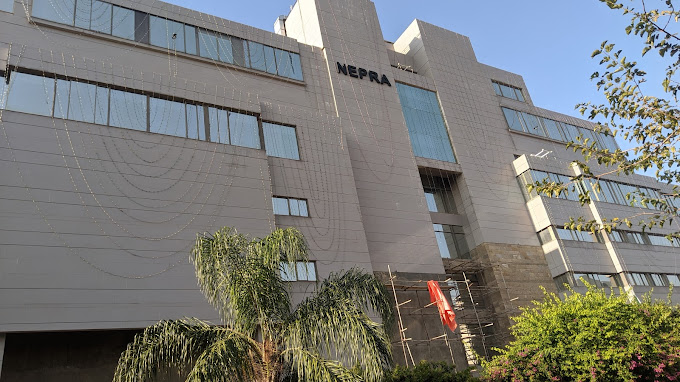
ISLAMABAD: National Electric Power Regulatory Authority (NEPRA) has approved negative adjustment of Rs 0.0102 per unit in FCA for the month of March 2026 across the country including K-Electric.
NEPRA held a public hearing on the FCA adjustment request of CPPA-G on April 28, 2026 in which CPPA-G had sought positive adjustment of Rs 0.2660 per unit. The separate FCAs for each DISCO has been worked out after accounting for energy procured from CPPAGL, bilateral contracts (SPPs/CPPs), and net metering within the respective basket of each DISCO.
The revised FCA shall be applicable to all the consumer categories of KE and WDISCOs, except lifeline consumers, Electric Vehicle Charging Stations (EVCS) and pre-paid electricity consumers of all categories who opted for pre-paid tariff.
During the CPPAGL presented the case in detail before the Authority, and highlighted that there was a 6.38% growth in the overall generation during the month of March 2026, compared to what was assumed in the reference tariff. The details of actual generation from different sources, along with their respective contribution to the overall generation mix, and a comparison of these parameters against the reference assumptions.
Regarding impact of drawl by K-Electric Limited (“KE”) from the National Grid, CPPAGL submitted that if KE had not been provided electricity from the National Grid, the cost for electricity consumers would have increased by Rs. 1.09/kWh on account of FCA and Rs.2.72/kWh on account of quarterly capacity purchase price resulting in a total increase in tariff of Rs. 3.81/kWh.
Tanveer Barry submitted that the reference FCC for March 2026 had been reduced pursuant to the CY 2026 tariff rebasing, as compared to the FCC earlier approved in the tariff for FY 2025-26, resulting in a positive FCA. It was noted that the reference FCC in the tariff for FY 2025-26 was based on the assumption of low hydrology, which, under prevailing conditions, is no longer relevant. The reference FCC approved under the CY 2026 tariff, when viewed in light of the actual generation pattern of the instant month, is more reflective of prevailing conditions. Accordingly, the resultant FCA claim, being based on a more accurate reference, is considered reasonable.
Amir Sheikh submitted that the quarterly adjustment request of DISCOs for January March 2026, which on an estimated basis appears to be negative, may be processed during the month of May and implemented in the months of June, July, and August 2026, in order to offset potential positive FCAs in the future. It was noted that the request of the commentator is well founded; accordingly, all the efforts shall be made to process the same in May for application within the subsequent three months. The commentator further requested that the FCA mechanism may also be applied in a manner similar to quarterly adjustments, i.e., based on prospective consumption. In this regard, it is noted that FCA, as per the approved mechanism, is approved and charged on the actual consumption of the relevant month, whereas quarterly adjustments are applied based on estimated generation for future months. Under the quarterly adjustment mechanism, under or over-recovery arises due to variations between actual and estimated units, which are subsequently adjusted in the following adjustment cycle. Applying a similar approach to FCA would result in comparable variances, requiring subsequent trueups.
Nonetheless, it is pertinent to mention that the mechanism for FCA and other periodical adjustments are approved while doing the annual rebasing, and it would be appropriate that such suggestions may be put forth during the next tariff rebasmg exercise. The commentator also requested an indicative estimate of the FCA for April 2026 to facilitate advance cost planning by industry. In response, CPPAGL submitted that it would not be possible to provide an accurate estimate, in advance; however, a tentative indication was given that the FCA. for April 2026 would be quite higher than that claimed for March 2026, given expensive fuels were utilized in April 2026 to serve the demand. Furthermore, the commentator highlighted that the levy on HFO may be redirected to reduce electricity tariffs, similar to the treatment of the petroleum levy, as well as the levy on natural gas for captive power plants. The CEO of CPPAGL responded that the Government of Pakistan is actively considering the levy-related matters at appropriate forums, and any decision in this regard will be reflected accordingly. On the issue of load shedding during peak hours, as opposed to the current practice of off-peak load management by DISCOs, the CEO of CPPAGL noted the suggestion and stated that the matter would be taken up with DISCOs to facilitate industrial consumers, to the extent possible.
Arif Bilwani submitted that, as per circulating news, the procurement of RLNG is being made in the spot market, at relatively higher prices, which may result in a higher positive FCAs in future. In response, the representative of PPMC submitted that the decision of procuring RLNG is being made keeping in view that its generation is comparatively cheaper than RFO, and that it shall be utilized to ensure system stability and to provide relief to consumers from load management .
With regard to the query of Arif Bilwani regarding the interconnection readiness for supplying additional power to KE to mitigate load shedding, the representative of CPPAGL submitted that the existing interconnection capacity with KE is in the range of 2,100 MW to 2,400 MW, which is being supplied with, and that further capacity enhancement would require certain system upgradations. Further, the representative of PPMC clarified that the load shedding being carried out in KE is primarily revenue-based, rather than demand-based, as sufficient generation resources, including the supply from National Grid, are available to meet the prevailing demand. Ends
Expensive RLNG, imported coal, previous adjustments drive up September power costs
ISLAMABAD : A massive increase in the prices of regasified Liquefied Natural gas (RLNG) and Residual Fuel Oil (RFO), coupled...
Read more