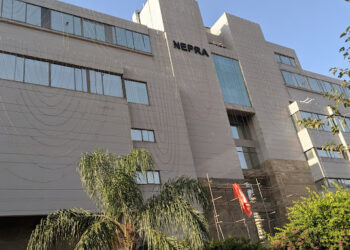
ISLAMABAD: A recent directive issued by Pakistan’s Oil & Gas Regulatory Authority (OGRA) has sparked concern across the oil marketing sector, as companies warn that new documentation requirements for Price Differential Claims (PDC) could significantly delay reimbursements and strain already tight cash flows.
Under the new mechanism, Oil Marketing Companies (OMCs) have been instructed to submit scanned copies of sales invoices—duly reconciled with summary sheets—and verified not only by their Chief Executive Officers (CEOs) or Chief Financial Officers (CFOs), but also by external auditors. The directive aims to streamline the processing of PDC claims and ensure transparency.
However, industry stakeholders argue that the requirements are impractical and disconnected from standard auditing practices.
“This level of invoice-by-invoice verification by external auditors is not how audit firms operate,” said a senior finance executive at a leading OMC, speaking on condition of anonymity. “Auditors review systems and financial statements, not thousands of individual invoices for certification.”
The PDC mechanism is designed to compensate OMCs for selling petroleum products below cost during periods of government-mandated price controls. Over recent months, companies have reportedly absorbed substantial financial burdens—funding approximately Rs 205 per litre on diesel and Rs 100 per litre on petrol—while awaiting reimbursement.
With claims now tied to extensive documentation and multi-layer verification, companies fear delays could worsen liquidity pressures.
“OMCs are already cash-constrained due to the scale of funding provided,” another industry official noted. “Any delay in PDC disbursement directly impacts our ability to maintain supply chains, pay suppliers, and manage operations.”
Audit firms, according to industry representatives, are unlikely to comply with the directive in its current form, as it falls outside the scope of conventional audit engagements. This creates a bottleneck in the claims process, potentially leaving large sums unrecovered for extended periods.
The situation has prompted calls for OGRA and the Ministry of Energy to revisit the requirements and align them with industry realities.
“There is no objection to accountability or verification,” said one executive. “But the mechanism must be practical. Otherwise, it defeats the purpose and risks disrupting fuel supply stability.”
As Pakistan continues to navigate economic challenges, the oil marketing sector remains a critical link in ensuring uninterrupted energy availability. Industry stakeholders warn that without timely resolution, administrative hurdles could translate into broader operational and financial stress across the sector.
OGRA has yet to issue a formal response to the concerns raised by OMCs. Ends
Expensive RLNG, imported coal, previous adjustments drive up September power costs
ISLAMABAD : A massive increase in the prices of regasified Liquefied Natural gas (RLNG) and Residual Fuel Oil (RFO), coupled...
Read more